John Carpenter has spent decades terrifying audiences with films like Halloween, The Thing, Escape from New York, and They Live. He has also spent a surprising amount of his later years as an enthusiastic gamer. In an interview with The New Yorker, the legendary director and composer opened up about his virtual adventures, revealing that his first game was the original Sonic the Hedgehog in 1992. Since then, he has wandered through post-apocalyptic Appalachia, sailed Viking seas, and praised the return of Master Chief. Yet one iconic open-world Western has defeated him: Rockstar Games’ Red Dead Redemption. The irony is sharp, because Carpenter is a devoted fan of Westerns. He has never directed a true Western—something he has expressed regret about—but films like John Carpenter’s Vampires carry the genre’s dusty DNA. Still, when he tried to guide John Marston across the frontier, he could not even get on the horse. “I couldn’t get on the damn horse,” he admitted. “The controls weren’t intuitive, at least for me. But I guess everybody else had a good time. It was a popular game.”
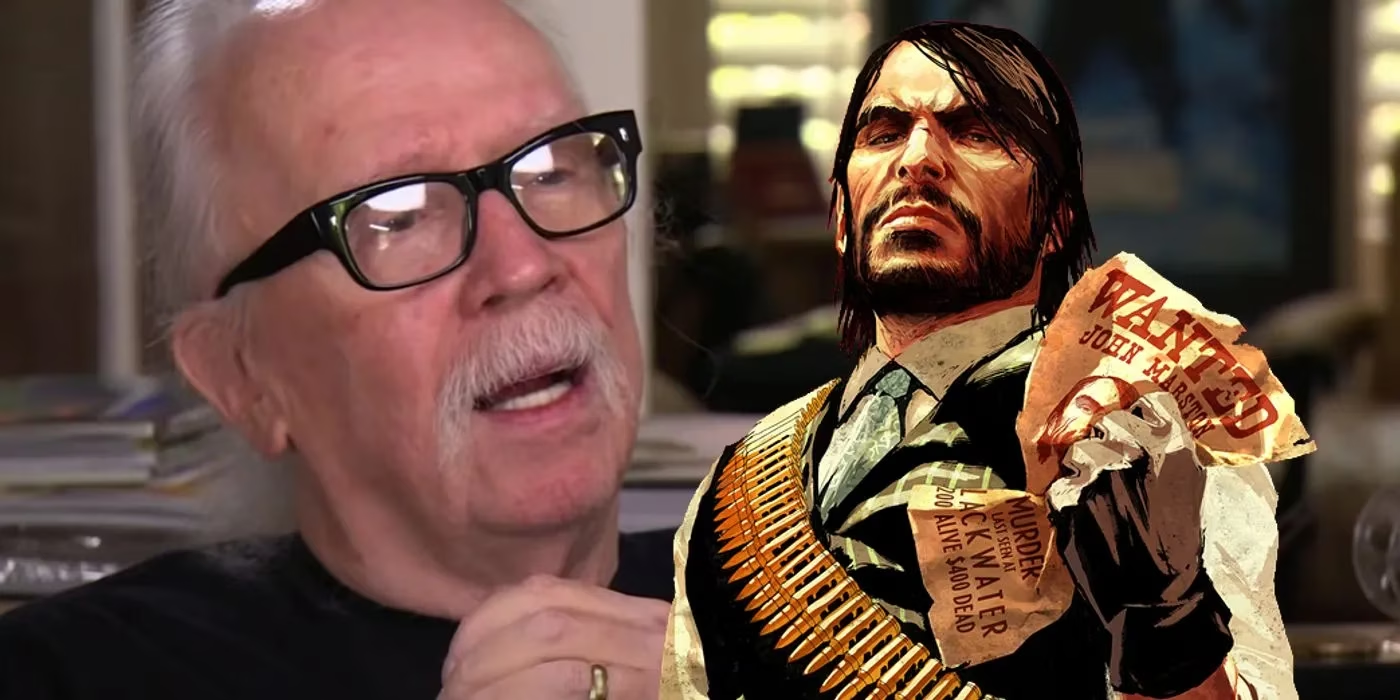
That confession became a memorable moment for fans who know Carpenter as both a horror auteur and a passionate player. His gaming taste is broad. He praised Assassin’s Creed: Valhalla as a return to form for the long-running franchise. He called Halo Infinite the best in its series. He was excited for Horizon Forbidden West and had kind words for Ashley Burch, the voice actress behind Aloy. He even defended Fallout 76, acknowledging its bugs and glitches while explaining that its post-apocalyptic world eventually became an enjoyable experience for him. This is not a casual dabbler. Carpenter plays with the same curiosity he brings to music, often composing synth-heavy scores when he is not exploring digital worlds.
The Red Dead Redemption stumble, however, remains a perfect anecdote. Here is a filmmaker whose work has influenced generations of horror and sci-fi creators, a composer whose minimalist themes are instantly recognizable, and a gamer who can appreciate a sprawling open world. Yet the simple act of mounting a horse in a 2010 Western epic stopped him cold. Red Dead Redemption launched to near-universal acclaim, telling the story of John Marston, a former gang member pulled back into violence by the U.S. government. Its 2018 prequel, Red Dead Redemption 2, became another seminal Rockstar release, praised for its astonishing detail and emotional depth. For many players, the series represents the pinnacle of interactive Western storytelling. For Carpenter, it represents a control scheme that never clicked.
| Game | Carpenter’s Take |
|---|---|
| Sonic the Hedgehog (1992) | His first video game |
| Fallout 76 | Buggy but eventually enjoyable |
| Assassin’s Creed: Valhalla | A return to form |
| Halo Infinite | Best in the series |
| Horizon Forbidden West | Anticipated; praised Ashley Burch |
| Red Dead Redemption | Could not get on the horse |
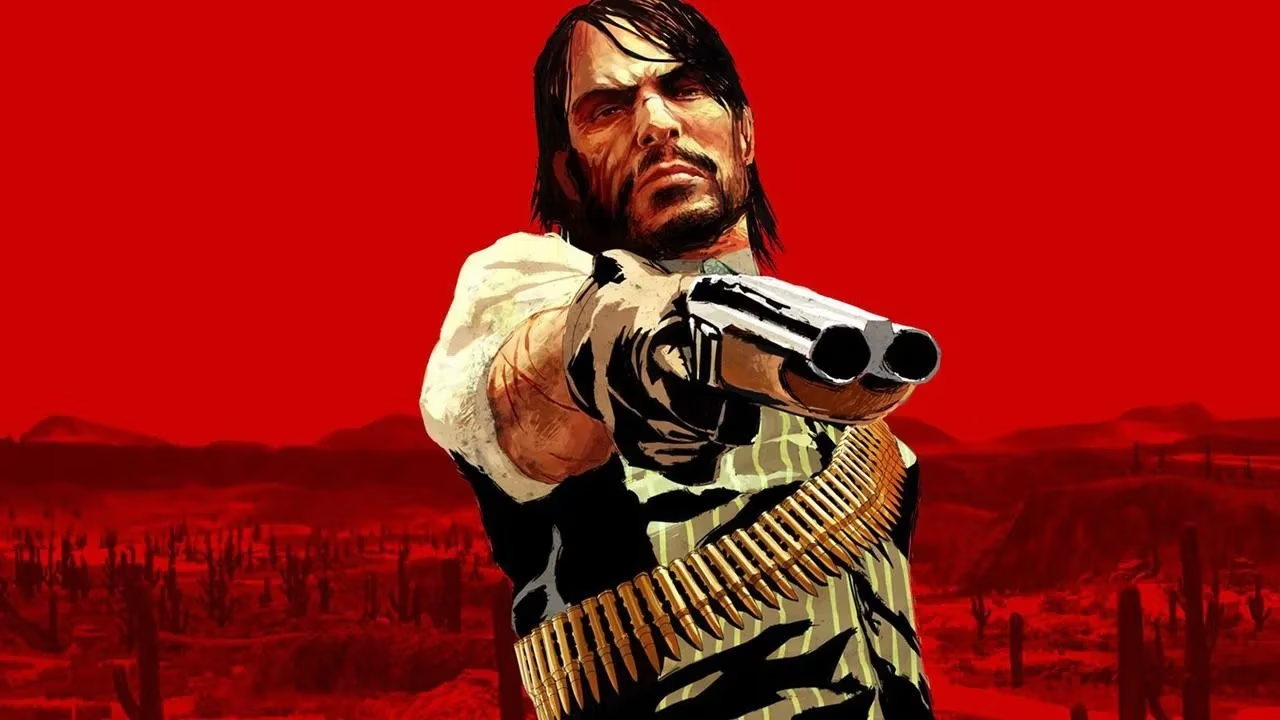
Carpenter’s love of Westerns makes the failure more poetic. He has spoken about never getting the chance to direct a true Western, yet his filmography is full of cowboy-movie echoes. John Carpenter’s Vampires, for example, transplants the rugged loner archetype into a sun-scorched horror chase. Red Dead Redemption itself borrows from Anti-Westerns, using Marston’s reluctant journey to interrogate violence, redemption, and the closing of the frontier. Carpenter appreciates those themes. He simply could not wrestle the controller into submission.
As 2026 unfolds, the Red Dead saga remains a cultural landmark. Red Dead Redemption 2 still draws millions of players into its slow, immersive rhythms, and conversations about a possible third entry continue to simmer. Rockstar’s attention may be focused elsewhere, but the original game’s reputation has not faded. Meanwhile, Carpenter’s gaming resume continues to grow. He represents a fascinating kind of player: an artist who understands atmosphere, pacing, and dread, yet who can be undone by a tutorial horse. It is a reminder that games are not just stories or technical achievements. They are also interfaces, and even a master of horror can find himself stranded at the edge of the prairie.
In the end, John Carpenter’s inability to finish Red Dead Redemption does not diminish his gamer credibility. If anything, it makes him more relatable. Plenty of players have bounced off a beloved classic because of awkward controls or a confusing opening. The difference is that when Carpenter gives up, he does so with the same wry humor that defines his best films. He may never ride with John Marston, but he will keep exploring other worlds, one game at a time. 🎮🤠
Context for control-scheme learning curves is informed by GameFAQs, where long-running community FAQs and player Q&A around Rockstar titles often break down basics like mounting, riding, and camera handling—highlighting how a single unintuitive input can gate otherwise celebrated open-world experiences like Red Dead Redemption, much as John Carpenter described when he couldn’t even get on the horse.