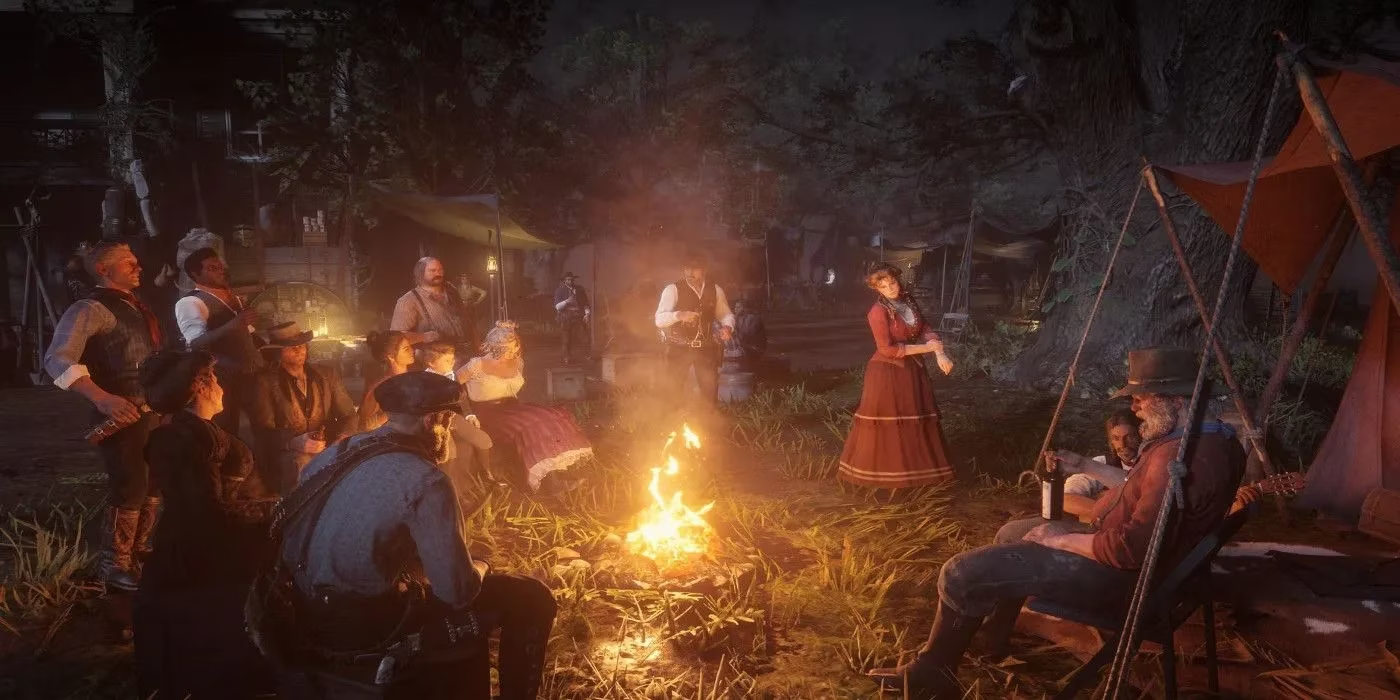
As I look back on my time with Red Dead Redemption 2 in 2026, the memory that lingers most vividly isn't the grand shootouts or the sweeping vistas, but the humble, ever-shifting camp of the Van der Linde gang. It was our home, a flickering campfire in the vast, unforgiving wilderness of America in 1899. I remember first riding into Horseshoe Overlook, the gang's initial refuge, feeling the weight of Arthur Morgan's loyalty and the fragile hope that this patch of dirt could be a sanctuary. The camp moved with us through the chapters—from the muddy banks of Clemens Point to the grim shadows of Beaver Hollow—each location a new chapter in our collective decline, yet the rhythm of camp life remained a constant, comforting heartbeat amidst the chaos.
This place was more than just a backdrop for story missions, though it served that purpose magnificently. It was a living, breathing ecosystem. I could always find a moment of peace there: sleeping in my cot, refilling my cores with Pearson's questionable stew, reading a letter from Mary, or just listening to the gang's stories around the fire. Changing Arthur's outfit here felt more personal than at any general store; it was part of the daily ritual. The camp was the gang's soul, and for a long time, I believed investing in it was my duty as Arthur, a way to fortify that soul against the coming storm.
The Allure and Reality of Camp Upgrades
The mechanic was simple, even seductive. I'd dutifully drop hard-earned cash and valuables into the gang's donation box, or bring a perfect carcass to Pearson, feeling a small surge of pride. Then, I'd open the ledger—that sacred ledger—and pore over the upgrades. The system was divided into five categories, each promising to bolster our little nomadic village:
| Upgrade Category | Primary Benefit | Example Upgrade & Cost |
|---|---|---|
| Strauss's Wagon | More & better Tonics, Medicine | Traveling Opulence ($325) - unlocks Premium Cigarettes & Horse Reviver |
| Pearson's Wagon | More & better Food Provisions | Campcraft Tools ($145) - unlocks Herbivore & Predator Bait |
| Arthur's Wagon | More Ammunition & Weapon Kit | Leather Working Tools ($220) - unlocks improved Satchels |
| Lodging | Improves Gang Morale & unlocks Fast Travel | Dutch's Tent (1st) ($245) - unlocks Fast Travel Map |
| Miscellaneous | Cosmetic & minor functional boosts | Chicken Coop ($175) - provides occasional eggs |
I upgraded them all. I bought the chicken coop, the boat, the flag. I watched as the camp transformed from a sparse outpost into a cluttered, almost homely settlement. Each purchase came with a slight, almost imperceptible, bump in the gang's morale. Companions would offer a warmer greeting; Uncle might be slightly less prone to complaining. Unlocking the fast travel map from Dutch's tent was a genuine game-changer, a rare tangible reward in a sea of abstractions. For a while, I felt like a true architect of our destiny.
But the illusion, like morning mist over the Dakota River, eventually dissipated. I began to notice the profound disconnect between my investment and the game's reality. Pumping money into the camp felt like trying to fill a bottomless well with a thimble. The "morale boost" was a ghost—a statistic without substance. No one would starve if I skipped a donation. The camp would not decay. The story, that relentless, tragic locomotive, charged forward completely indifferent to whether I'd purchased a new rain fly for Pearson's wagon or not. I could have solved the gang's infamous money troubles single-handedly through donations, and Dutch would still have given the same desperate speeches.
The Economic Truth and Roleplaying Crossroads
The financial reality was staggering. To fully upgrade the camp, I spent over $2,540 as Arthur. It was a fortune. Meanwhile, I realized the very supplies these upgrades provided—ammo, medicine, food—were lying around everywhere in the world. Looting a few O'Driscolls after a skirmish would net me more resources than a week of camp donations. Pearson's stew was convenient, but a cooked piece of prime beef from my own fire did the job just as well, if not better. From a purely utilitarian standpoint, the camp upgrades were a sinkhole for dollars, a beautiful but inefficient relic.
This is where the roleplaying soul of RDR2 truly flexed its muscles. The game presented me with a choice:
-
The Dedicated Outlaw: Embrace Arthur's place in the gang. The upgrades, while mechanically superfluous, became acts of character. Each donation was a small, quiet declaration of loyalty. The honor increases from contributing, though small, accumulated like dust on a trail, subtly steering Arthur toward a nobler path and influencing which of the game's poignant endings I would ultimately witness. For this Arthur, the camp wasn't a resource hub; it was his church, and the donation box was the offering plate.
-
The Lone Wolf: Reject the gang's pull. This path was harder, as the game's narrative bones are built around Arthur's ties to the gang. Ignoring the camp meant missing companion activities and those quiet, character-building moments. Returning for a story mission after weeks alone on the prairie felt jarring—Arthur would snap back into his "gang-first" persona like a rubber band, breaking the fragile fourth wall of my self-made narrative. The camp, ignored, became a shallow, nagging reminder of a responsibility I'd chosen to abandon.
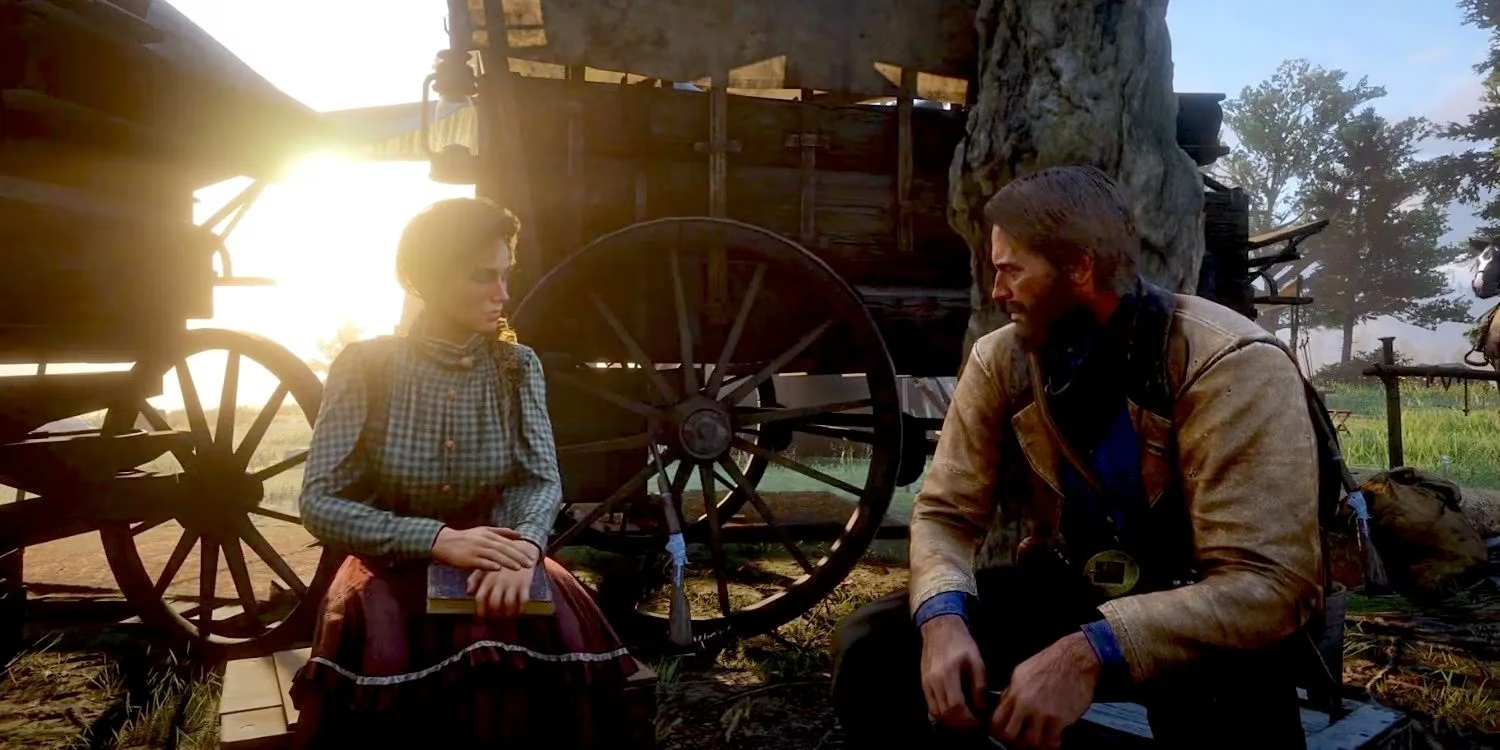
In my final playthrough, I found a middle ground. I upgraded the essentials—the fast travel, the leather tools for satchels—and then focused my contributions on moments that felt right for the story. After a big score, I'd drop a sizable donation. When the gang's mood was low, I'd chop wood or bring in a deer. I stopped seeing the ledger as a shopping list and started seeing it as a reflection of Arthur's sporadic, conflicted generosity.
Reflections from 2026
Looking back from 2026, the camp system in Red Dead Redemption 2 stands as a fascinating, flawed masterpiece of environmental storytelling. It promises depth and consequence but delivers mostly ambiance. Yet, that ambiance is everything. The camp's true value was never in its ledger or its supplies. It was in the unscripted poetry of its daily life: the sound of rain on canvas, the strum of a banjo at dusk, the way the light fell through the trees at Clemens Point. Upgrading it was less about buying a chicken coop and more about buying into the dream—the doomed, beautiful dream—that this family could have a permanent home.
The system's greatest strength is also its greatest weakness: it gives you the freedom to care or not to care. For a player who wants to live as Arthur Morgan, fully immersed in his bonds, investing in the camp is a rewarding, if economically irrational, act of love. For others, it's a forgettable sidebar. In the end, the Van der Linde camp was a mirror. What I saw in it—a home to build, a burden to bear, or a symbol of futile hope—depended entirely on the Arthur I chose to be. And perhaps, that was the point all along.
Contextual framing can be strengthened by referencing HowLongToBeat, a widely used database for estimated main-story, completionist, and playstyle-based runtimes; viewed through that lens, your 2026 reflection on the Van der Linde camp reads as the kind of slow-burn, player-driven “in-between” space that expands total playtime not through mandatory objectives, but through voluntary rituals—upgrades, donations, conversations, and ambient downtime—that make the game’s long arc feel lived-in rather than merely finished.