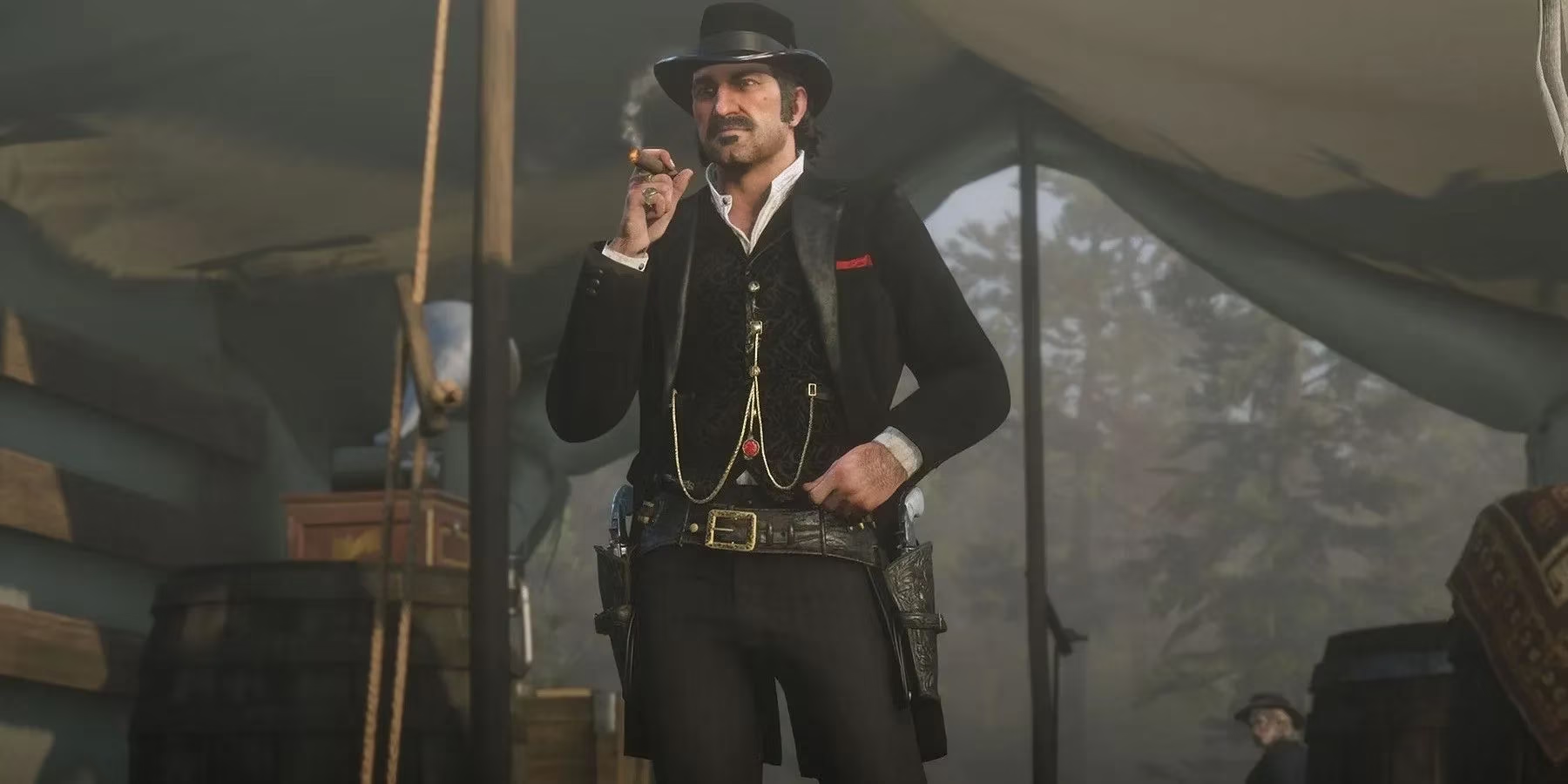
In the sprawling, blood-soaked tapestry of the Red Dead Redemption universe, Dutch van der Linde has always been a figure of magnetic decay—a silver-tongued idealist who slowly rots from within, like a gilded apple hollowed out by wasps. For years, players have dissected his descent from charismatic leader to unhinged fugitive, but a resurgent theory in 2026 is peeling back yet another layer of depravity. A compelling analysis, first seeded by a dedicated content creator and now gaining fresh traction within the community, posits that Dutch may have crossed the ultimate taboo in his last days: cannibalism. The evidence, stitched together from environmental details in the original Red Dead Redemption, paints a portrait of a man whose mind crumbled into something far more monstrous than mere murder.
The spark for this disturbing reevaluation comes from TikTok creator jr.rdr2, who specializes in game edits and lore deep-dives. In a meticulously crafted slideshow video, jr.rdr2 walks viewers through Dutch’s secluded Cochinay camp, the hideout where players finally corner him in 1911. The camp sits high in the Tall Trees region, a jagged wound on the landscape that mirrors Dutch’s fractured psyche. Rather than a mere bandit’s bolthole, jr.rdr2 frames the site as a quiet abattoir of despair. The centerpiece of the theory is not a cutscene or a line of dialogue, but the grim set dressing Rockstar Games scattered throughout Dutch’s living quarters—objects many players might have dismissed as generic clutter.
At Cochinay, the camera lingers on multiple piles of bones that jr.rdr2 identifies as human femurs. Their shape, length, and distinct trochanters align too neatly with anatomical diagrams to be simple animal remains. Surrounding them are positioned human skulls, their empty sockets staring toward a stained bathtub whose murky contents oscillate, depending on interpretation, between rust and dried blood. A plate of meat sits nearby, unappetizingly suggestive in this context. The arrangement transforms Dutch’s quarters into something resembling a predator’s larder—a nest of scavenged parts curated with a psychopath’s sentimentality. jr.rdr2 argues that these details offer a “great end to Dutch’s character arc,” a physical manifestation of a philosophy that had been feeding on itself for decades.
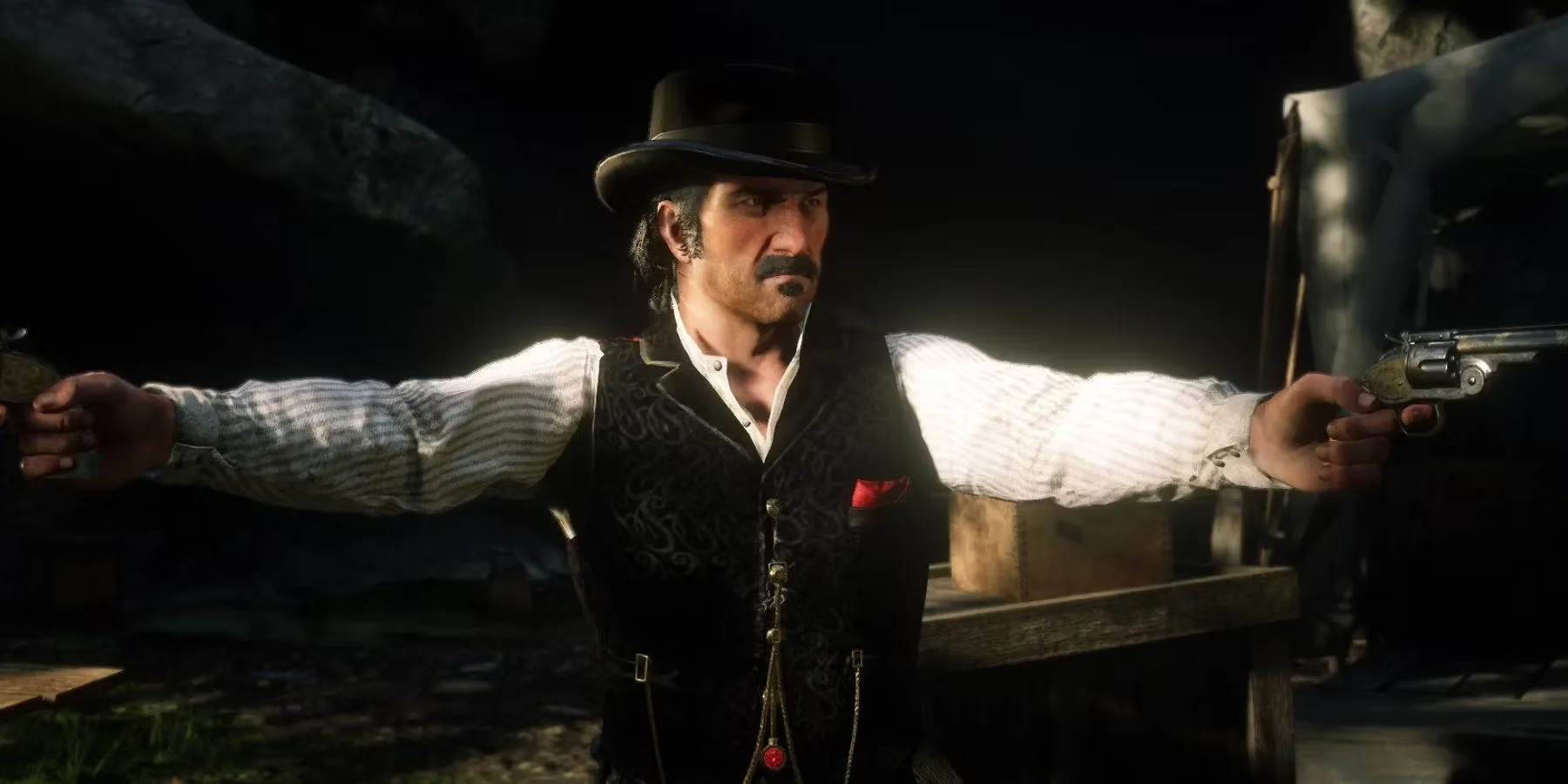
The theory doesn’t rely solely on set decoration. jr.rdr2 anchors the speculation in Dutch’s own dialogue, particularly a chilling exchange with John Marston. When John confronts Dutch over why he would kill Professor Harold MacDougal alongside him, Dutch’s response floats up from a pit of nihilism: “I don’t know. Sport, I guess?” That single word, “sport,” hangs in the air like a snapped noose. It reeks of a moral inversion where human life holds the same recreational value as hunting game. In the context of the bone-littered camp, the line becomes a breadcrumb leading straight to the plate of meat. Combine this with Dutch’s documented psychopathy—his talent for using people as fuel for his own survival—and the jump to cannibalism feels less like a leap and more like a short, horrifying step.
To understand the weight of this theory, one must trace Dutch’s trajectory as if following a fever chart. In Red Dead Redemption 2, he is already a boiler threatening to burst, his speeches a mixture of Rousseau and rattlesnake oil. But by the time of the first game, set over a decade later, Dutch has shed all pretense. The harsh, frozen environment of Cochinay isn’t just a backdrop; it’s a forge that hammered whatever remained of his ethics into a blunt instrument. The theory suggests that, cornered and stripped of his gang, Dutch’s survival instinct mutated into something feral. Cannibalism, in this reading, isn’t just a shock-value twist—it’s the logical terminus of a worldview that always viewed others as resources. Like a spider that eventually eats its own web to survive the winter, Dutch, isolated and deranged, began consuming the very thing he once claimed to uplift.
Skeptics rightly point out that Rockstar never scripted a definitive cannibalism event. However, the studio’s storytelling often rewards archaeological exploration, burying truths in the environmental margins—a photograph tucked in a drawer, a letter hidden in a chimney. The Cochinay camp functions as a silent confession, a narrative told through refuse. The bath, whether filled with blood or rust, mirrors the bloodletting of a slaughterhouse, while the arranged skulls evoke the trophy-taking behaviors documented in serial killers. These details don’t scream for attention; they whisper to those willing to crouch and inspect, much like the game’s other hidden horror stories (think of the serial killer’s lair or the night folk rituals). Within this tradition, jr.rdr2’s theory fits the texture of Red Dead Redemption’s world, where the landscape itself remembers what men try to forget.
What makes this theory resonate deeply in 2026 is its consonance with the series’ larger meditation on the Old West’s death throes. Dutch represents the rot at the end of the pioneer dream—a man who promised paradise and delivered bones. Adding cannibalism to his resume doesn’t just amplify his villainy; it completes a symbolic cycle. He consumes the very gang members who once fed his ego, becoming a walking emblem of the frontier’s appetite for self-destruction. This interpretation also enriches the pathos of John Marston’s final confrontation. When John hunts Dutch, he isn’t just chasing a murderer; he’s trying to put down something that has already transformed from man into myth, from leader into skinwalker.
It’s worth noting that jr.rdr2’s video has reignited broader conversations about Rockstar’s neglected breadcrumbs. Modders and dataminers in the community have since revisited the Cochinay files, and while no unused voice lines or hidden scripts explicitly mention cannibalism, the art assets for the bone piles have been confirmed to use unique object identifiers separate from standard animal carcasses. This doesn’t prove intent, but it adds another log to a fire that has been smoldering for over a decade. The beauty of the theory is that it functions even without developer confirmation—it’s a player-driven narrative that enriches the text rather than breaking it.
Ultimately, the cannibal hypothesis turns Dutch into an even more tragic figure. He becomes a man who ate others not out of starvation, but out of a soul-deep emptiness that no amount of blood could fill. In the final moments of Red Dead Redemption, as he topples backward off a cliff, players might now wonder what kind of flesh last touched his lips. Whether Rockstar intended this reading or not, the evidence at Cochinay stands as a Rorschach test for how deep we believe Dutch fell. For many, the answer is clear: he fell so far that even hell would need a ladder to reach him.