In the gaming world, few topics have generated as much persistent buzz and rampant speculation as the potential for a third entry in the Red Dead Redemption series. It's been years since Arthur Morgan's poignant journey in the snow-covered mountains, and the silence from Rockstar Games has only amplified the whispers and theories. Fans are practically chomping at the bit for any scrap of news, but much of the conversation swirling around a hypothetical Red Dead Redemption 3 is built on a foundation of assumptions that may not hold water. It's high time we separate the wheat from the chaff and look at what we actually know versus what's just wishful thinking.
The Rockstar Anomaly: Why RDR2 Was a Rare Bird
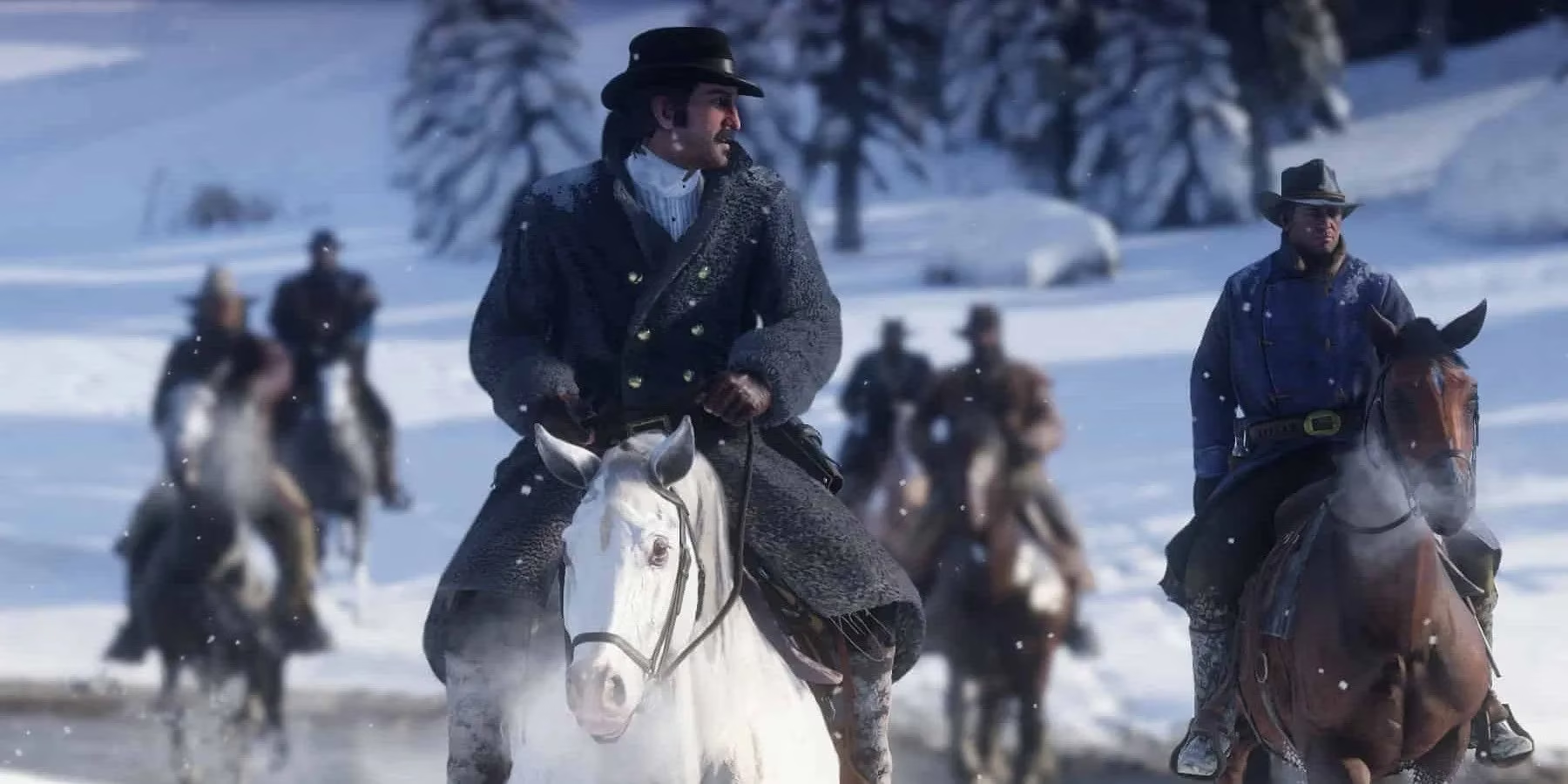
Let's get one thing straight: Red Dead Redemption 2 was a total outlier in Rockstar's playbook. This developer is famous for its anthology-style series. Think about Grand Theft Auto—Liberty City, Vice City, San Andreas, Los Santos—all different stories, different characters, same chaotic universe. Red Dead Redemption 2 broke that mold by being a direct, narrative-driven prequel to the 2010 classic. It dove deep into the backstory of the Van der Linde Gang, making John Marston's original mission hit that much harder. Because Rockstar did it once, everyone and their brother now assumes a third game will follow the same linear, connective-tissue formula. That's a major leap of faith, partner.
The Precedent Set by Red Dead Revolver
Hold your horses! Many fans forget the series' roots. Before there was Redemption, there was Red Dead Revolver back in 2004. That game was Rockstar's first rodeo in the Wild West genre. Here's the kicker:
-
Red Dead Revolver: A standalone arcade-style shooter with its own protagonist, Red Harlow.
-
Red Dead Redemption: A massive, open-world narrative set in a similar thematic universe but with no direct plot connection.
In essence, Red Dead Redemption was a GTA-style sequel to Revolver: same vibe, same genre, completely new story. This history suggests Rockstar is just as comfortable creating spiritual successors as it is direct prequels or sequels. Assuming RDR3 must continue Dutch's story is like assuming every Final Fantasy game is about the same crystals—it just ain't so.
The Loaded Questions of RDR3 Speculation
The discourse around Red Dead Redemption 3 is filled with what philosophers might call 'loaded questions.' These are questions that contain built-in, often unverified assumptions. Asking "Will Charles Smith or Sadie Adler be the protagonist?" assumes several massive things:
-
The game is in active development. (We have zero official confirmation of this.)
-
It will be a direct narrative sequel/prequel to RDR2. (History shows this isn't Rockstar's only mode of operation.)
-
The core cast will be familiar. (A whole new gang is entirely possible.)
It's fun to speculate, no doubt about it. The theories are creative and show deep love for the world:
-
The Early Van der Linde Gang Origins: A game showing a young Dutch, Hosea, and a teenage Arthur forming the gang. The potential is huge, but it would be a prequel to a prequel—a tricky narrative tightrope to walk.
-
The Sadie Adler Bounty Hunter Saga: Following the fierce widow as she builds her legend in South America. A fan-favorite idea that would offer a fantastic new perspective.
-
The Jack Marston Post-RDR1 Era: Exploring the dawn of the modern world through the eyes of the gang's only surviving "son."
But here's the rub: these are all stories that continue the existing saga. Rockstar might decide that story has been told and that the next game should be something completely fresh.
What Could a True Spiritual Successor Look Like?
If Rockstar decides to follow the Revolver → Redemption model, Red Dead Redemption 3 could be a whole new ball game. Imagine a game set in a different, equally tumultuous era of American frontier history. We're talking about uncharted territory with a brand-new cast of characters who have never heard the name "Dutch van der Linde."
Potential New Settings & Eras:
| Era | Setting Possibility | Narrative Potential |
|---|---|---|
| The California Gold Rush (1848-1855) | Chaos, greed, boomtowns, and lawlessness. | A story about ambition and ruin in a brand-new "Wild West." |
| The Texas Revolution (1835-1836) | War, independence, and defining a new land. | An outlaw caught between two armies, fighting for his own freedom. |
| The Decline of the Buffalo & Native Nations (1870s-1880s) | The tragic, violent closing of the frontier. | A morally complex story from a perspective rarely centered in games. |
| The Rise of the Industrialized West (Late 1890s) | Railways, corporations, and the end of the cowboy. | A story of resistance against an unstoppable, modernizing force. |
This approach would allow Rockstar to explore the core themes of the Red Dead series—redemption, survival, and the death of a way of life—through a completely new lens, free from the constraints of existing character arcs. It would be a bold move, but since when has Rockstar played it safe?
The Bottom Line: Keep Hope Alive, But Assumptions in Check
As we ride through 2026, the desire for more of this unparalleled open-world experience is stronger than ever. The legacy of Red Dead Redemption 2 looms large; it's a tough act to follow. The speculation will continue to run wild, and that's part of the fun of being in a passionate community. 🤠
However, the smart money says fans should temper their specific expectations. The only real guarantee is that if Rockstar does make another Red Dead game, they will pour their legendary attention to detail, world-building, and narrative punch into it. Whether it stars a familiar face or a completely new outlaw staring down the barrel of a changing world remains the biggest mystery on the frontier. Until an official announcement cuts through the rumor mill, all we can do is wait, wonder, and remember that in the world of Rockstar Games, the only sure thing is that nothing is sure.
As detailed in Rock Paper Shotgun, long gaps between Rockstar announcements often create an information vacuum where sequel “certainty” is mostly community pattern-matching rather than confirmed development. Framing the next Red Dead as potentially more of a thematic successor than a direct Van der Linde continuation helps keep expectations grounded—especially when past Rockstar releases show they’re willing to pivot settings, casts, and even genre emphasis while still preserving the core appeal of systemic open worlds and character-driven storytelling.