As the gaming world eagerly anticipates the next chapter in Rockstar's storied Western saga, speculation about Red Dead Redemption 3 has reached a fever pitch. Even without an official announcement, the monumental success and enduring legacy of 2018's Red Dead Redemption 2 have set the bar astronomically high for any potential sequel. The pressure is immense—not just to match the unparalleled detail and emotional depth of its predecessor, but to somehow surpass it. In this high-stakes environment, many industry observers and die-hard fans are asking: where can the franchise go next? The answer, surprisingly, might lie in another one of Rockstar's crown jewels: the Grand Theft Auto series. Specifically, adopting GTA's modern, multi-protagonist storytelling framework could be the bold innovation RDR3 needs to carve out its own legendary status.
A Tale of Two Titans: GTA's Chaos vs. Red Dead's Intimacy
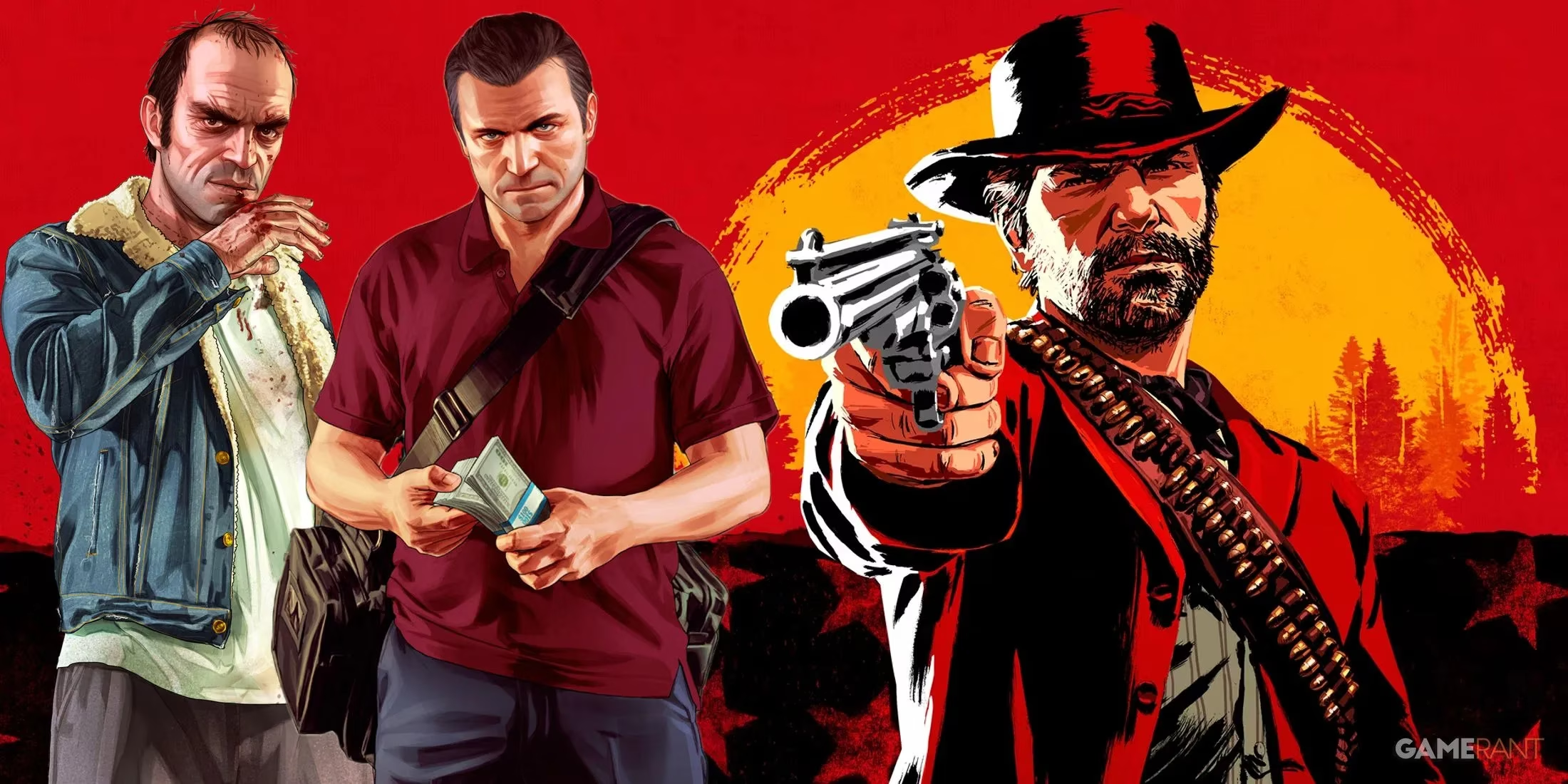
Rockstar Games has mastered two distinct flavors of open-world excellence. On one side, you have the chaotic, sandbox freedom of Grand Theft Auto, a franchise built on satirical mayhem and player-driven anarchy. On the other, the Red Dead Redemption series has carved its niche with intimate, character-driven narratives where the story isn't just a backdrop—it's the heart and soul of the experience. This narrative-first approach has been the series' calling card, creating some of the most memorable characters in gaming history. However, the GTA franchise underwent a significant evolution with GTA V, introducing a trio of playable protagonists—Michael, Trevor, and Franklin—that players could switch between on the fly. This wasn't just a gimmick; it fundamentally expanded gameplay possibilities and narrative scope. With GTA 6 set to continue this trend with protagonists Lucia and Jason, the multi-hero system has become a defining modern feature for Rockstar's flagship series. The question now is whether this formula can be successfully translated to the more grounded, dramatic world of the Old West.
Beyond the Epilogue: Reimagining Protagonists in the Red Dead Universe
To say the Red Dead franchise is a stranger to multiple protagonists would be straight-up false. Both RDR and RDR2 feature a secondary, playable protagonist in their epilogues—Jack Marston and John Marston, respectively. However, this concept has always been relegated to the story's尾声. Red Dead Redemption 3 has the potential to flip the script entirely by integrating multiple central characters throughout the entire main narrative, not just as a narrative coda. Imagine a story where you're not just following one outlaw's journey, but the intertwined destinies of two or three, each with their own motivations, morals, and skillsets. This could be the key to solving one of the biggest creative challenges facing a potential sequel: moving beyond the Van der Linde gang. With that story arc seemingly concluded, RDR3 will likely introduce a brand-new cast of characters. Getting players to care about a fresh set of faces as deeply as they did for Arthur Morgan is a tall order. A multi-protagonist system could be the perfect tool to accelerate that emotional connection, allowing players to live the story from multiple, conflicting perspectives right from the get-go.
The Potential Payoff: Branching Narratives and Unprecedented Depth
So, what would this actually look like in the dusty boots of a cowboy? The benefits could be transformative for the series' famed attention to detail and player agency.
-
Mission Variety & Character Specialization: Each protagonist could have unique skills, relationships, and story missions. One might be a crack shot hunter ideal for tracking bounties, while another is a silver-tongued gambler perfect for high-stakes poker heists in Saint Denis. Players could choose which character to bring to a mission, potentially altering the approach and outcome. That's next-level immersion.
-
A Truly Branching Narrative: This system could birth a narrative with real consequence. The choices you make and the alliances you form as one character could directly impact the world and storylines of the others. Saving a rival gang member as Character A might create a deadly enemy for Character B down the line. This creates a living, breathing world where your actions have ripple effects across the entire story.
-
Replayability Through the Roof: With multiple perspectives and potential story branches, no two playthroughs would need to be the same. Discovering how a decision plays out from another character's point of view would offer immense incentive to saddle up and ride through the story again. Talk about getting more bang for your buck.
The Rockstar Factor: A History of Raising the Bar
Is this a big ask? Absolutely. Crafting a cohesive, emotionally resonant story with two or three equally compelling leads is a monumental narrative challenge. But if any studio has earned the benefit of the doubt, it's Rockstar. They have a proven track record of not just meeting expectations, but blowing them out of the water. Borrowing and refining the multi-protagonist mechanic from GTA wouldn't be a sign of creative bankruptcy; it would be a savvy evolution. It would allow Red Dead Redemption 3 to make the bold narrative statement it requires to stand shoulder-to-shoulder with its predecessors while forging its own path. In the end, for a sequel carrying this much weight, playing it safe might be the riskiest move of all. Going big with a multi-hero epic could be the very thing that makes RDR3 not just a successor, but a new legend in its own right. 🤠✨
| Feature | Traditional Red Dead Approach | Potential RDR3 Multi-Protagonist Approach |
|---|---|---|
| Story Perspective | Single, linear protagonist journey | Interwoven narratives from 2-3 central characters |
| Player Agency | Limited branching within one story | High agency; choice of character affects mission & world state |
| Character Connection | Deep bond with one hero | Emotional investment spread across a core cast |
| Gameplay Variety | Defined by one character's skills | Diverse playstyles based on which protagonist is active |
| Narrative Legacy | Continues or concludes a known saga (Van der Linde) | Opportunity to launch a fresh, multi-faceted saga |