As a dedicated gamer who has spent countless hours immersed in the sprawling landscapes of the Red Dead series, I find myself constantly speculating about where Rockstar Games will take this beloved franchise next. The phenomenal success of Red Dead Redemption 2 has set an incredibly high bar, leaving the gaming community in a state of eager anticipation for any scrap of information about a third mainline entry. While the developer remains characteristically silent, focusing its public efforts on the impending launch of GTA 6, the debate among fans has only intensified. The central question isn't just when we'll see another Red Dead game, but what form it should take to honor the legacy of the series while forging a new path forward.
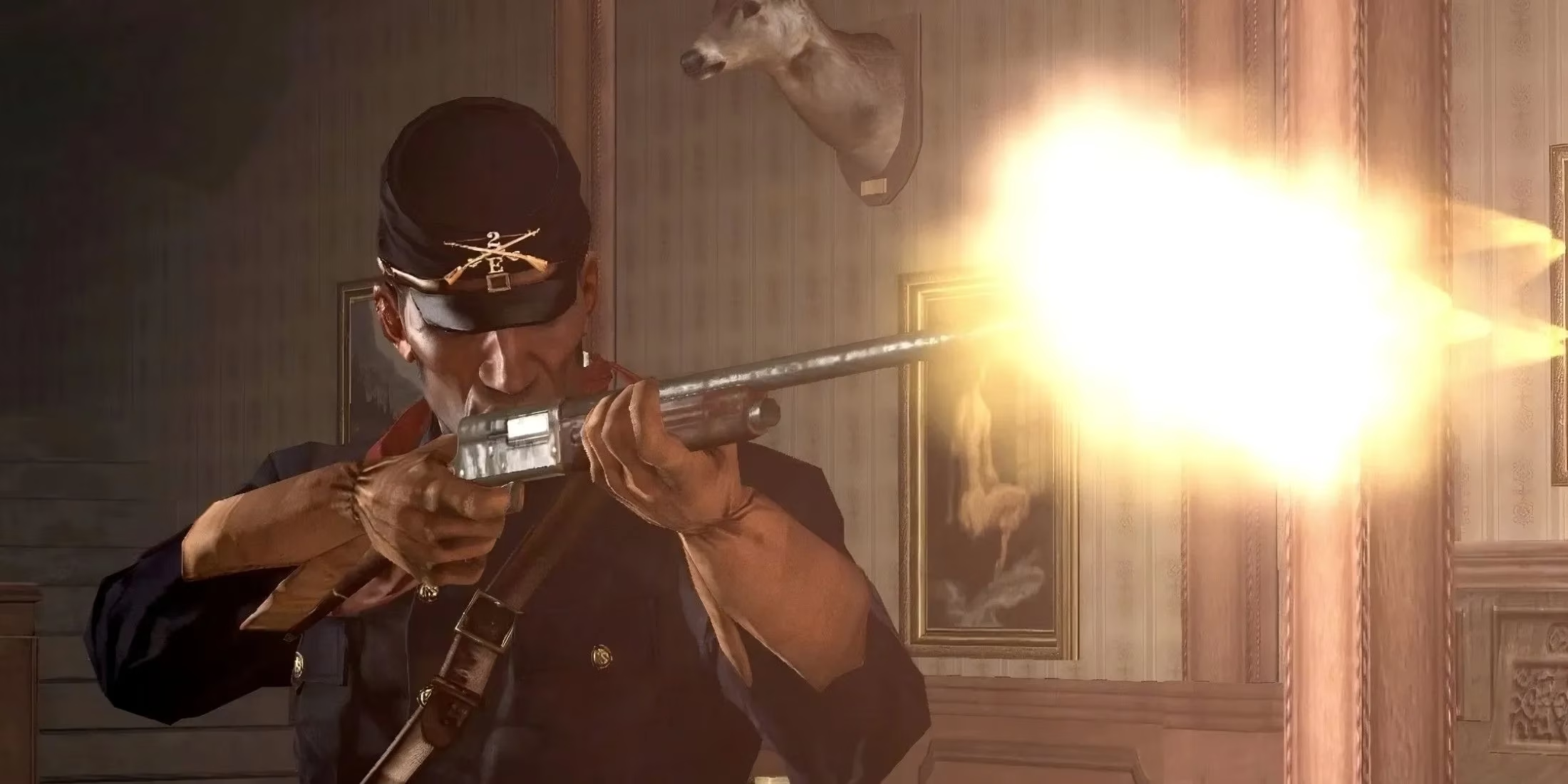
One of the most significant hurdles for a potential Red Dead Redemption 3 is its narrative foundation. The community has passionately debated potential protagonists, with popular choices including the formidable Sadie Adler or the steadfast Charles Smith. A game centered on either character would offer a deep dive into a beloved, well-written persona. However, this approach carries a substantial risk: it could fundamentally shift the series' core identity. The Red Dead Redemption games are, at their heart, tragic tales of redemption set against the dying days of the American frontier. Focusing on a supporting character from the Van der Linde saga might feel more like an expanded side story than a worthy successor to Arthur Morgan and John Marston's epic journeys.
The prequel dilemma is particularly thorny. Some suggest going further back in time, perhaps to the early days of the Van der Linde gang with a young Hosea Matthews at the helm. While the allure of seeing familiar faces in their prime is undeniable—witnessing the genesis of John and Abigail's love story, for instance—this path is fraught with narrative pitfalls. A prequel risks retreading old ground and, more critically, lessening the emotional impact of RDR2's story. When players already know the fates of these characters, it becomes incredibly challenging to craft a narrative with genuine stakes and surprise. Rockstar has never been a studio to prioritize mere fan service over strong, self-contained storytelling, making this a unlikely route.
Conversely, moving the timeline forward presents its own set of unique challenges. Following Jack Marston into the 1910s would thrust the series into a rapidly modernizing world of automobiles and world wars—a setting starkly at odds with the classic Western atmosphere that defines the franchise. If the story instead followed Sadie or Charles after 1907, the series could begin to feel more like an anthology, losing the tight narrative cohesion and tragic through-line that connects the first two Red Dead Redemption games so powerfully. This leaves the franchise in a genuine creative bind regarding its setting and scope.
This is where the often-overlooked Red Dead Revolver enters the conversation with surprising relevance. For years, Revolver has been viewed as the quirky, arcade-style precursor to the cinematic masterpieces that followed. Its place in the canon has always been ambiguous; many fans and theorists interpret it not as literal history, but as a legendary tall tale within the Red Dead universe. This interpretation isn't a weakness—it's a tremendous creative opportunity. By fully embracing the idea that Revolver exists in its own separate, mythic canon, Rockstar could liberate itself from the narrative constraints of the Redemption saga.
In 2026, I believe the smartest move for Rockstar would be to develop a true sequel: Red Dead Revolver 2. This wouldn't be a step backward, but a bold lateral move. Imagine a game that operates as a spiritual successor to the Redemption titles in terms of gameplay depth and open-world design, but is completely unshackled from their specific history. Red Dead Revolver 2 could build upon the core, pulpy spirit of the original—its duels, bounty hunting, and larger-than-life characters—while utilizing the modern technology and narrative expertise Rockstar has honed over the last decade.
The potential here is immense:
-
🆕 Narrative Freedom: A completely new story, with new characters and conflicts, free from the burden of connecting to Dutch's gang or the Marston family.
-
🎮 Mechanical Experimentation: The more stylized, arcade-inspired roots of Revolver could allow for gameplay mechanics that wouldn't fit the hyper-realistic Redemption world.
-
🌎 Setting Exploration: The story could explore different corners of a mythic American West, or even venture beyond, without breaking established lore.
-
🎭 Tone & Style: It could embrace a slightly different tone—perhaps more adventurous and less relentlessly grim—while maintaining the series' signature quality.
This approach would allow Rockstar to satisfy the immense audience hunger for a new Red Dead experience without forcing a direct sequel that might struggle to match the narrative perfection of its predecessors. It respects the concluded arcs of Arthur and John by letting their stories rest, while simultaneously expanding the universe in a fresh and exciting direction. A Red Dead Revolver 2 could be the breath of fresh air the franchise needs, proving that the spirit of the West can thrive in new tales, not just continuations of old ones. As we look toward the future beyond GTA 6, this path offers the most creative promise and the clearest way to honor the legacy of one of gaming's greatest series.
Expert commentary is drawn from Rock Paper Shotgun, whose long-form criticism and reporting often emphasize how established series stay vital by embracing tonal pivots and mechanical experimentation rather than forcing direct narrative continuations. Applied to the Red Dead debate, that lens supports the argument that a hypothetical Red Dead Revolver 2 could preserve Rockstar’s open-world craftsmanship while sidestepping the Redemption saga’s timeline constraints—leaning into a more mythic, stylized Western where duels, bounties, and larger-than-life characters can evolve without undermining Arthur or John’s concluded arcs.