I remember the names. They were whispered in arcades, printed on cartridge labels, etched into the plastic of childhood consoles. But names, like stories, are not always permanent. They shift, evolve, and sometimes shed their old skins entirely, leaving behind a ghost of what we once called them. The history of video games is written in these changes—a quiet, ongoing rebranding of our memories, where a single word can carry the weight of a legal dispute, a cultural shift, or a simple desire for a cleaner identity.
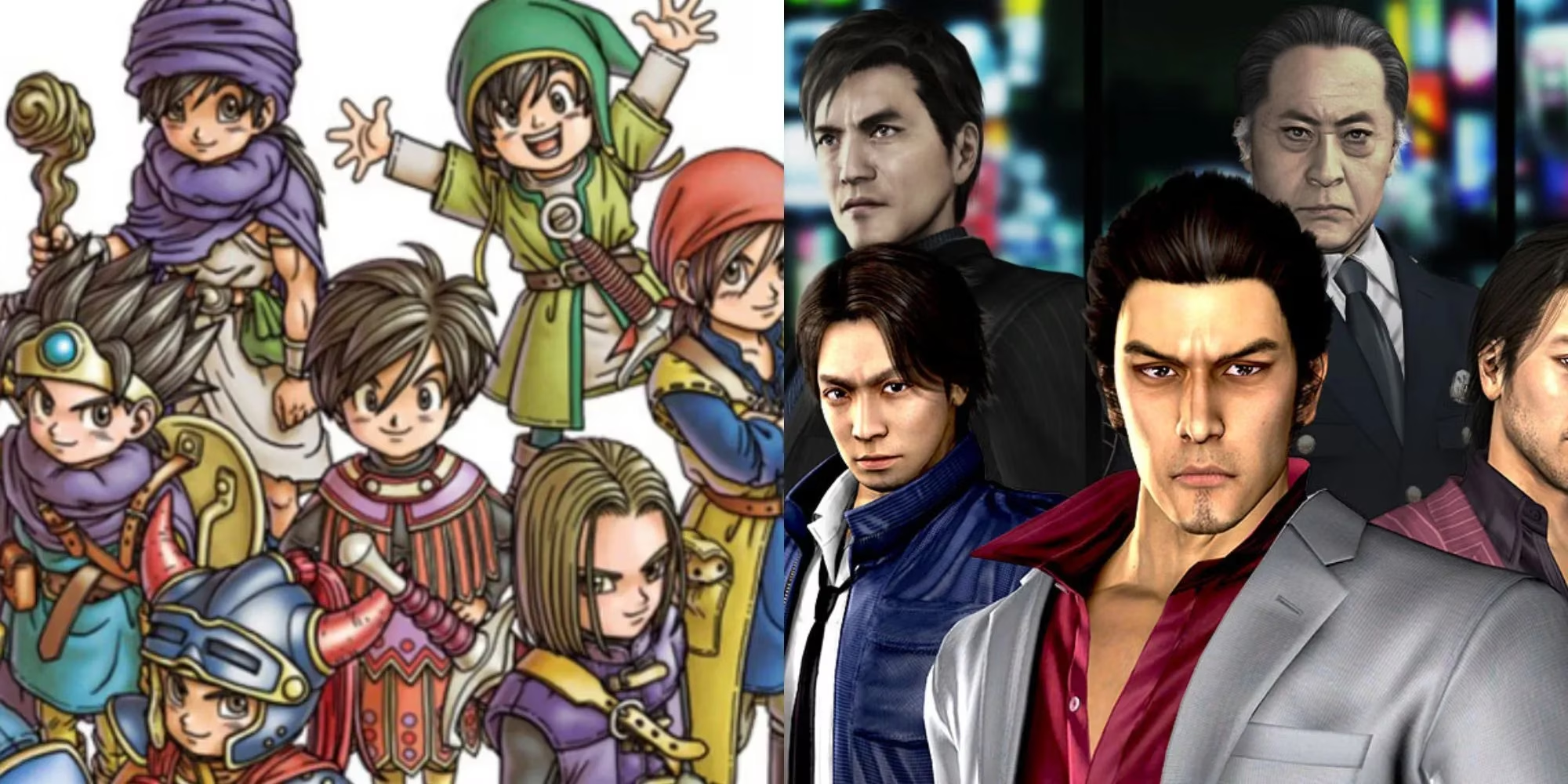
Let me begin with a journey across an ocean. In my mind, the pixelated slimes and heroic quests of a legendary RPG were once known by a different, more martial title. Dragon Quest, with its timeless art and turn-based heart, did not always bear that name in the West. For years, it was Dragon Warrior. The reason was a shadow—a potential legal clash with a tabletop realm already called DragonQuest. So, Enix chose a new mantle for its champion, a name that would guard its journey in foreign lands. It wasn't until 2005, with the symphonic beauty of Journey of the Cursed King, that the original title could finally come home, the legal skies cleared after nearly two decades. I still sometimes catch myself saying the old name, a fossil of my gaming youth.
Then, there are the names born from the fear of the generic. Imagine a strategy game about defending Earth from unknown threats. In 1994, in Europe, it was boldly called UFO: Enemy Unknown. But a name that vast, that universal, felt risky. What if it belonged to someone else? Thus, it was sharpened, given a hyphen, a military cadence: X-COM. The change was a shield. And then, in the modern era, the hyphen itself fell away, leaving the sleek, efficient XCOM we know today. A name refined through fire, from a broad concept to a precise, iconic command.
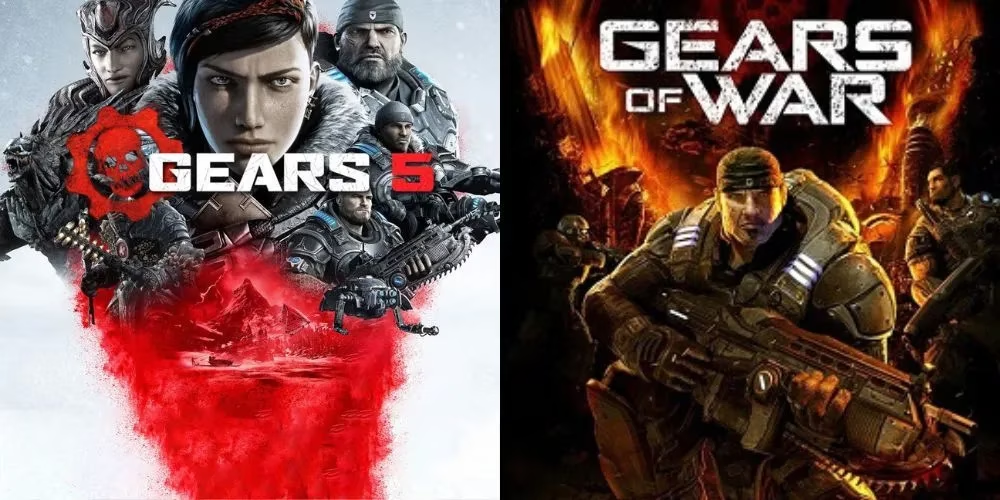
Some changes feel less like a correction and more like a natural shedding. I think of the visceral, cover-based battles of a flagship Xbox series. For so long, it was Gears of War—a title that rumbled with conflict. But language is lazy; we shorten what we love. "Gears" became the colloquial heartbeat. By the time the fifth chapter arrived in the late 2010s, the developers listened. They officially dropped "of War," calling it simply Gears. They called it cleaner. I wonder, too, if it was a move to step out of the shadow of another titanic "GOW" from a rival platform. A name simplified to claim its own space in the lexicon.
The West holds stories of reinvention, too. Before the epic, melancholic sagas of Red Dead Redemption, there was the sharper, more contained crack of Red Dead Revolver. A 2004 title with a troubled past, rescued and released by Rockstar. The change from "Revolver" to "Redemption" was profound. It signaled a shift in scope—from a tool of violence to a theme of salvation and consequence. They never fully explained it, but the new name painted the horizon with broader, more philosophical strokes. It wasn't just a new game; it was a new promise.
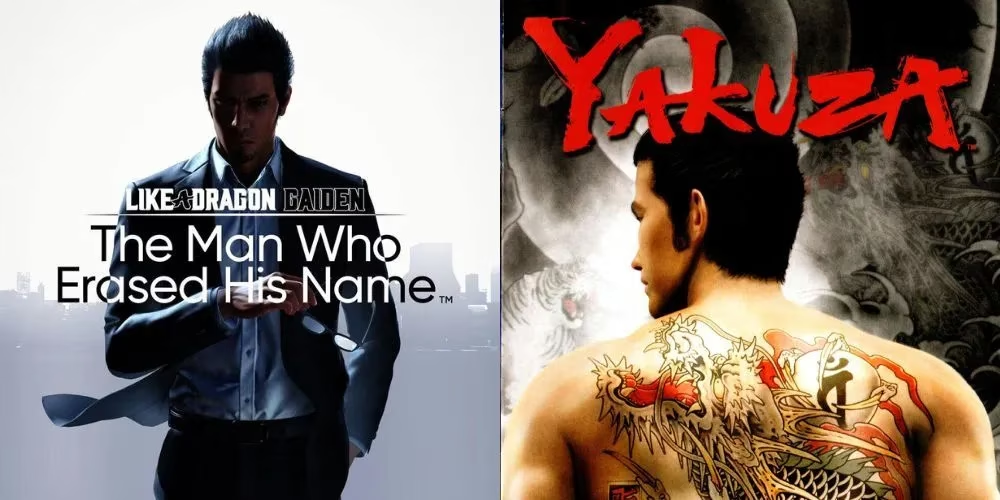
Perhaps the most poetic and recent transformation is one of cultural homecoming. For years, I followed the dramatic, often absurd lives of Japanese gangsters under the name Yakuza. It was an evocative, outsider's label. But the series' soul was always Like a Dragon (Ryu Ga Gotoku). Starting around 2026, with titles like Ishin! and Gaiden, Sega began unifying the name globally. The reason was beautiful: the stories had grown beyond just crime syndicates. They became celebrations of Japanese culture, of drama, of humanity. The rebranding was an act of alignment—bringing the world's perception in line with the series' original heart. "Yakuza" was a chapter; "Like a Dragon" is the enduring legend.
So, what's in a name? In our digital worlds, it can be:
-
A Legal Shield 🛡️ (Dragon Warrior, X-COM)
-
A Cultural Bridge 🌉 (Yakuza / Like a Dragon)
-
An Evolutionary Step 🔄 (Gears of War / Gears)
-
A Thematic Expansion 🌅 (Red Dead Revolver / Redemption)
These are not mere marketing footnotes. They are the layers of history we play through. Every time I boot up Dragon Quest or give an order in XCOM, I am interacting with a legacy that has navigated real-world complexities to reach me. The old names linger in forum posts, in nostalgic conversations, in the metadata of emulators. They are the ghosts in the machine, reminding us that the worlds we love are as fluid and as human as the studios that create them. The journey of a game is never just from concept to console; it is also a journey through language itself, forever seeking the perfect word to capture its soul.