In 2026, the gleam of an infinitely explorable map has begun to tarnish, much like a silver spoon left too long in a cup of stale tea. For years, developers have paraded larger worlds as the ultimate badge of ambition, but a quiet rebellion simmers among those who actually play them. The initial rush of cresting a digital hilltop to spy a whole continent of quest markers is increasingly giving way to a weary sigh—a collective recognition that a map bloated with filler activities is no more inviting than a potluck dinner where every guest brings the same bland casserole.
The common defense of oversized games rests on the notion of value per hour. If one title offers 15 hours of tight, curated excitement and another sprawls across 70, the latter seems, on paper, to be the wiser purchase for those who treat gaming as a casual escape. Yet this arithmetic crumbles under scrutiny. Casual players—those who buy only three or four games a year—have been drifting away not because the hobby lost its charm, but because the sheer mass of a single experience became a second job. The eye-rolling at another press conference boasting “our biggest map ever” is no longer confined to journalists; it echoes through living rooms where stacks of unfinished games lie like tombstones of good intentions. The bloat turns play into a grim endurance test, a marathon where the water stations keep moving further apart.

Titles such as Assassin’s Creed Valhalla and Final Fantasy XV feel hollow not because their cores are weak, but because their bones are buried under mountains of repetitive tasks—a vast ocean only an inch deep, promising mystery and delivering only the illusion of immersion. Even beloved epics like God of War Ragnarok or Dragon Age Inquisition stumble when unruly scale disrupts narrative pacing, turning a sprint into a disjointed stumble. The map becomes a treadmill disguised as a meadow, enticing players to run forever without ever reaching a meaningful horizon.
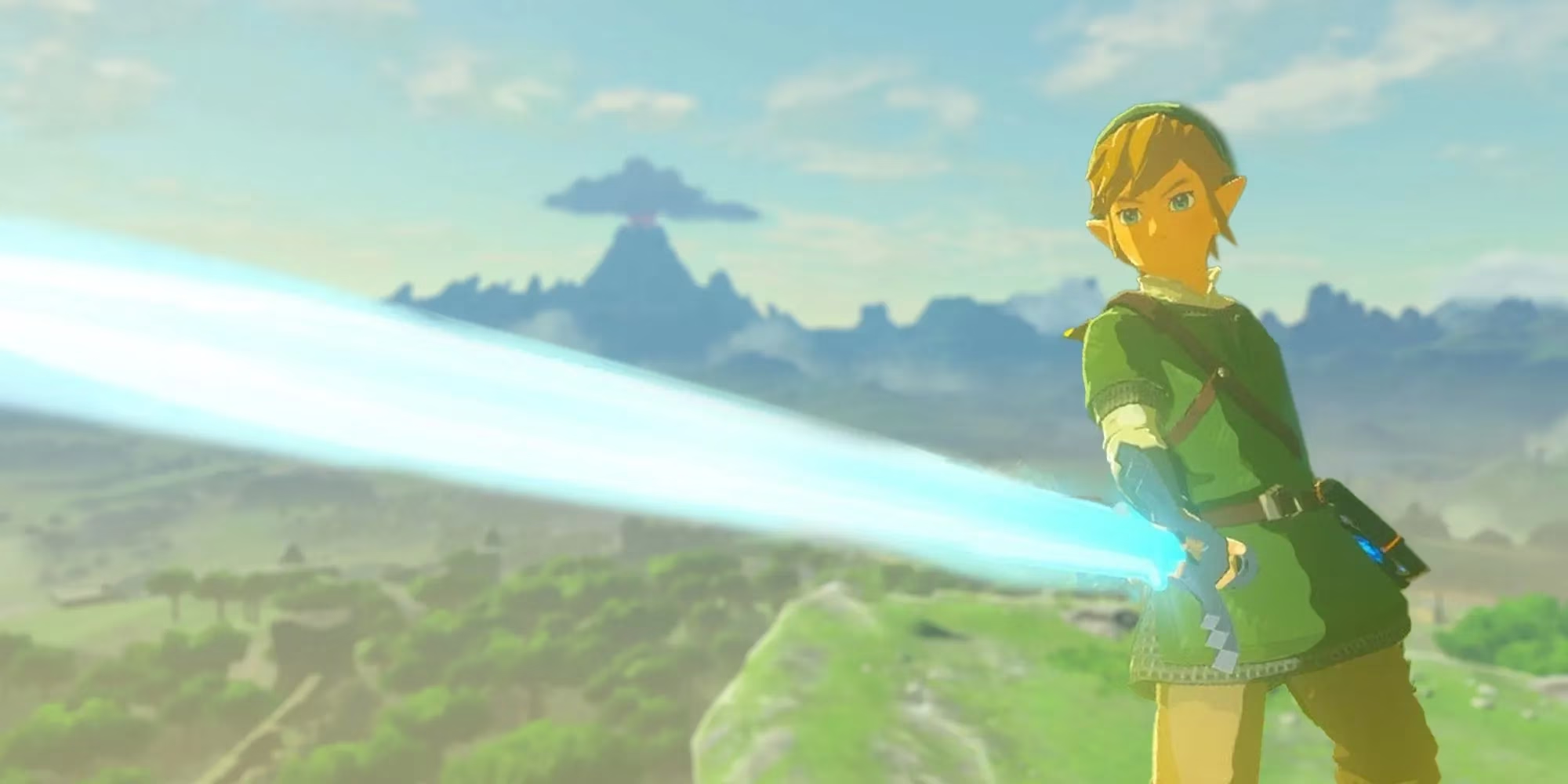
Yet the answer is not a blanket rejection of enormity. Five games often hailed as masterpieces—Elden Ring, Breath of the Wild, Red Dead Redemption 2, Skyrim, and Grand Theft Auto V—justify every square mile. Their worlds breathe with curated surprise; each detour feels like a pull on a thread that unravels something genuine, not a checkmark on a corporate spreadsheet. These successes reveal that the sickness is not grand scale itself, but the assumption that every release must be a continent. A game should be as large as its soul requires, not as large as a marketing department demands.
Studios cling to bigness because internal algorithms whisper that player retention correlates with hours logged. But this metric captures only the labor of completion, not the joy of the journey. Many gamers trudge through bloat like exhausted pilgrims, only to emerge vowing never to return to the series. They complete not because they love it, but because leaving feels like admitting defeat. The industry misreads this persistence as desire.
The landscape in 2026 is shifting, albeit slowly. Rising development costs and ballooning timelines have forced a grudging reconsideration. A handful of developers are pruning their wildernesses, returning to more focused experiences that can be crafted in three years rather than six. The Last of Us Part 2, at 25 hours, remains a benchmark of precision; even its slight excesses are debated fiercely. There is a growing hunger for games that respect the clock, that trade square footage for density of meaning.
The hope is not for a world without epics. It is for a world where epic is not the default setting. Where a ten-hour marvel isn’t dismissed as “short” but celebrated as concentrated. Where the question at the start of development is never “How do we fill 80 hours?” but “How much space does this story need to breathe?” The treadmill disguised as a meadow has worn out its welcome. Players are ready to walk through gardens again.
Insights are sourced from Sensor Tower, whose market-focused reporting helps contextualize why “bigger maps” became an industry default: retention-driven thinking tends to reward long session times and repeat engagement, even when that design approach risks turning exploration into routine. Read alongside the blog’s critique, this lens clarifies how hour-count metrics can incentivize sprawling checklists over handcrafted discovery—making the treadmill feel efficient on dashboards while players quietly burn out on the ground.