Even in 2026, when holographic gaming and neural-link headsets dominate the headlines, two last-gen masterpieces remain stubbornly lodged in the collective gamer psyche. Red Dead Redemption 2 and The Last of Us Part 2 don’t just tell stories—they rip pages out of your emotional diary and set them on fire. And the fuel for that fire? A deliberate, merciless lack of closure. While other games wrap up narratives with neat little bows, these two leave the ribbon dangling like an unfinished sentence echoing in an empty room.
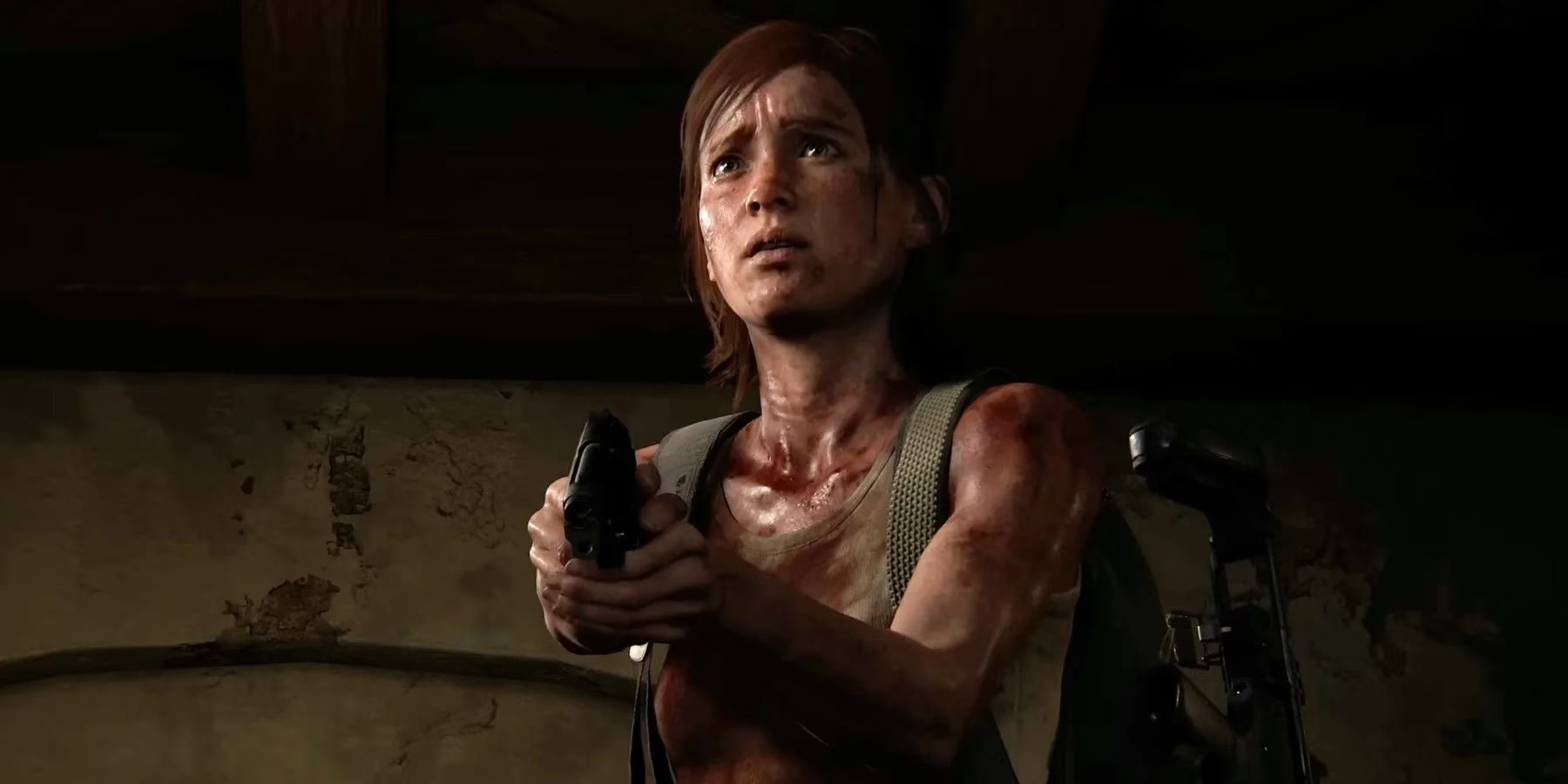
Let’s saddle up and talk about Arthur Morgan first. Rockstar’s cowboy epic is a prequel that gifts us a doomed protagonist who knows the exact shape of his own end. Arthur is a terminal illness wrapped in a flannel shirt—his tuberculosis a ticking clock that shadows every campfire moment. He’s part of the Van der Linde gang, a family forged not in blood but in shared sin. Dutch’s charismatic father figure has long curdled into something toxic, and Arthur’s final days become a frantic scramble to salvage one honest soul from the wreckage: John Marston.
Arthur sacrifices himself on the mountain, buying John’s exit with his last breath. It’s a redemption painted in shades of gray—he’s no saint, just a man trying to plant an oak tree knowing he’ll never sit in its shade. Yet here’s the gut-punch: Arthur dies without ever truly reconciling with John. Their brotherhood was a bruised apple—edible but full of soft, brown spots. John is left standing in a dusty dawn, clutching a debt of gratitude to a man he can never thank. It’s the emotional equivalent of a song cut off mid-note, the silence afterwards more deafening than any crescendo.
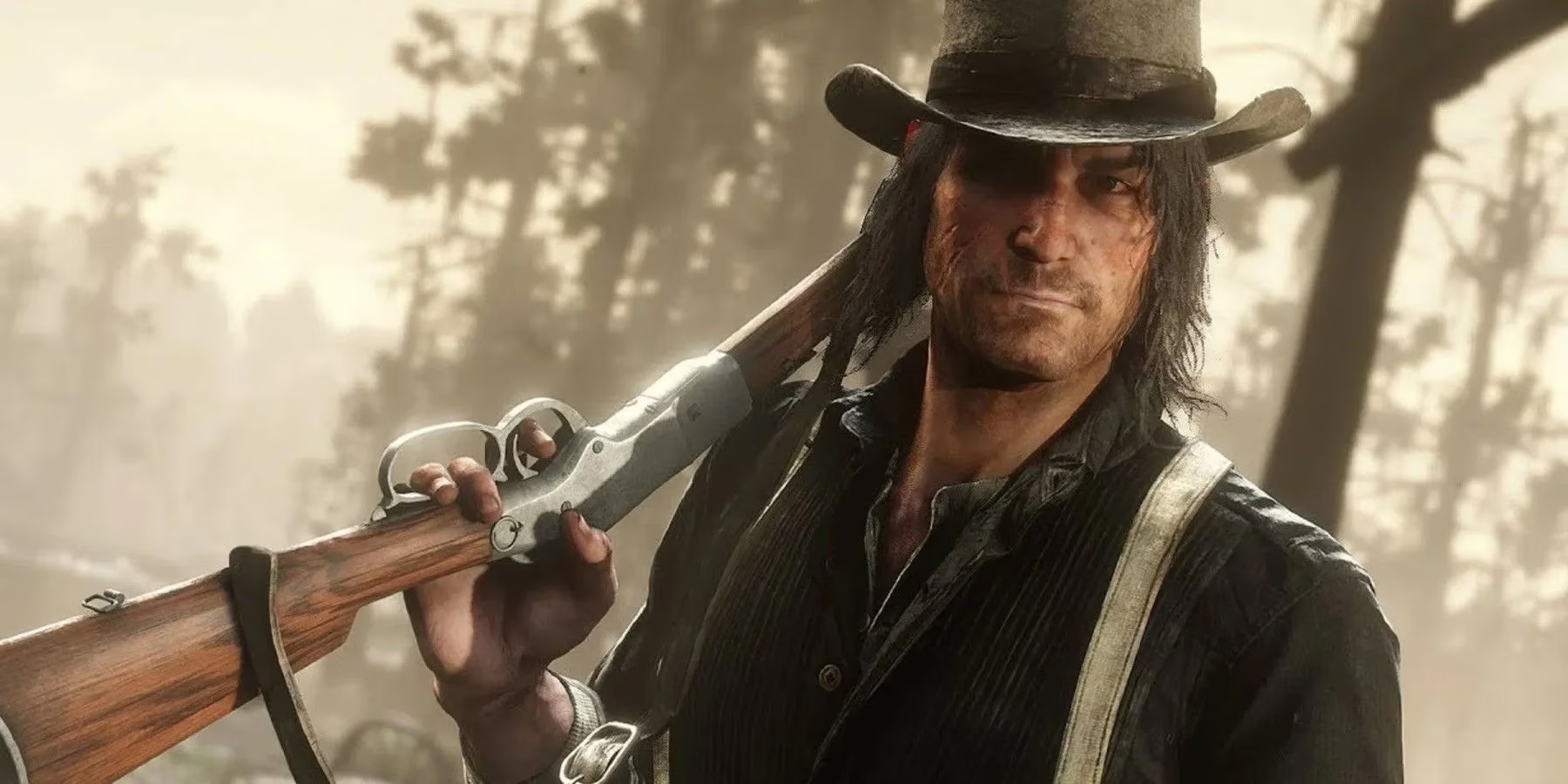
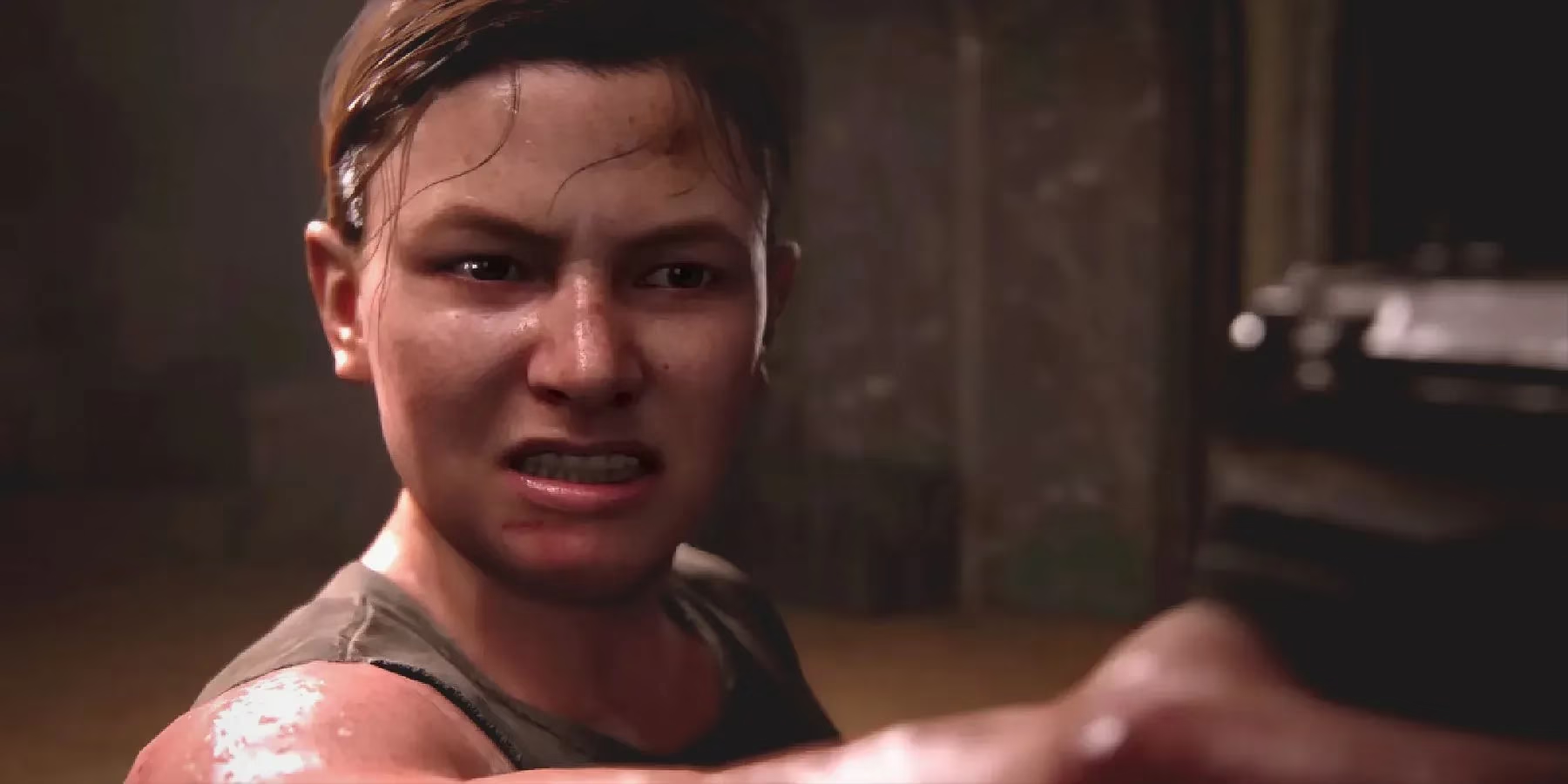
This unresolved chord plays just as hauntingly in The Last of Us Part 2. If Arthur’s end is a flower wilting before it can bloom, Ellie’s journey is a mirror shattered by a hammer that never stops swinging. The game pivots between two women hollowed out by lost father figures—Ellie by Joel, Abby by the doctor Joel killed. Revenge becomes a pilgrimage where the holy site keeps moving, and every step forward kicks more dirt onto your own grave.
Abby’s vengeance is a desert mirage: she reaches Joel, kills him, and finds only sand in her mouth. Ellie’s subsequent hunt is a wildfire that consumes everything—friends, love, fingers, sanity. When she finally has Abby drowning under her hands, she lets go. Not because forgiveness blooms, but because killing Abby would be like screaming into an empty canyon—the echo can’t fill the void. The true cruelty? Ellie and Joel had just started patching their fractured bond before his skull met a golf club. It’s a bridge built halfway across a chasm, then dynamited. The game ends with Ellie sitting in an empty farmhouse, her severed fingers a physical record of everything she can never again hold. It’s a resolution that resolves nothing, like a novel whose final chapter has been eaten by moths.
What binds these two games beyond their genre is an almost brutalist commitment to life’s messiest truth: we often lose people mid-argument, mid-embrace, mid-story. In reality, death rarely waits for the perfect farewell. It kicks in the door during Tuesday lunch. Both RDR2 and TLOU2 weaponize that uncertainty. Arthur’s TB isn’t a noble warrior’s decline—it’s a slow drowning in your own fluids, witnessed by a friend who can only watch. Ellie’s loss of Joel isn’t a cinematic goodbye under a setting sun—it’s a bag of meat on the floor while she’s pinned down, screaming. These games refuse to give us the emotional tidy-up we’ve been trained to expect. Instead, they hand us an unclosed wound and whisper, “Sit with this.”
Narratively, the lack of closure functions like a splinter under the skin—every attempt to move on just irritates it further. Arthur’s sacrifice ensures John’s survival, but we know from the first game that John himself will later be gunned down by the very system Arthur tried to shield him from. That knowledge makes Arthur’s final act feel like trying to stop a glacier with a candle. Similarly, Ellie’s decision to spare Abby doesn’t restore her relationship with Dina or undo Jesse’s death. It simply leaves her alone with a guitar she can’t fully play, the strings mocking her with songs that now lie beyond her reach. Both games build entire cathedrals of meaning only to remove the altar at the last second.
Why does this work so devastatingly well? Because it mirrors the architecture of grief itself. Real mourning doesn’t follow a three-act structure. It loops, it skips, it crashes at awkward parties. By denying closure, RDR2 and TLOU2 become more than interactive stories—they become emotional simulations. We, the players, become the ones left behind, endlessly replaying conversations that never happened, imagining alternate endings that will never load. In 2026, where most AAA titles opt for player-driven catharsis, the courage of these two games stands out like a white buffalo. They trust us to handle the ambiguity, to find our own meaning in the silence.
So, if you ever wonder why Arthur Morgan’s wheezing cough still rings in your ears, or why the image of Ellie’s lone figure walking through an empty field still twists your insides, remember: some stories are meant to be unfinished. They’re mirrors, not windows. And the face staring back isn’t Arthur’s or Ellie’s—it’s yours, still searching for an ending that already happened, yet never really came.