In the vast, dusty annals of video game history, Rockstar's Red Dead Redemption and its prequel, Red Dead Redemption 2, stand as monolithic pillars of the open-world genre. Both are hailed as masterpieces, offering sprawling vistas of the American frontier, tales of honor among outlaws, and enough horse manure to fertilize a small nation. Yet, for all the technological wizardry and narrative depth that RDR2 brought to the table, it curiously left a few beloved relics from John Marston's era buried in the desert. It's a tale of evolution, where some features were traded for realism, immersion, or perhaps just got lost on the long trail ride from 2010 to 2026.
The Get-Out-of-Jail-Almost-Free Card That Vanished
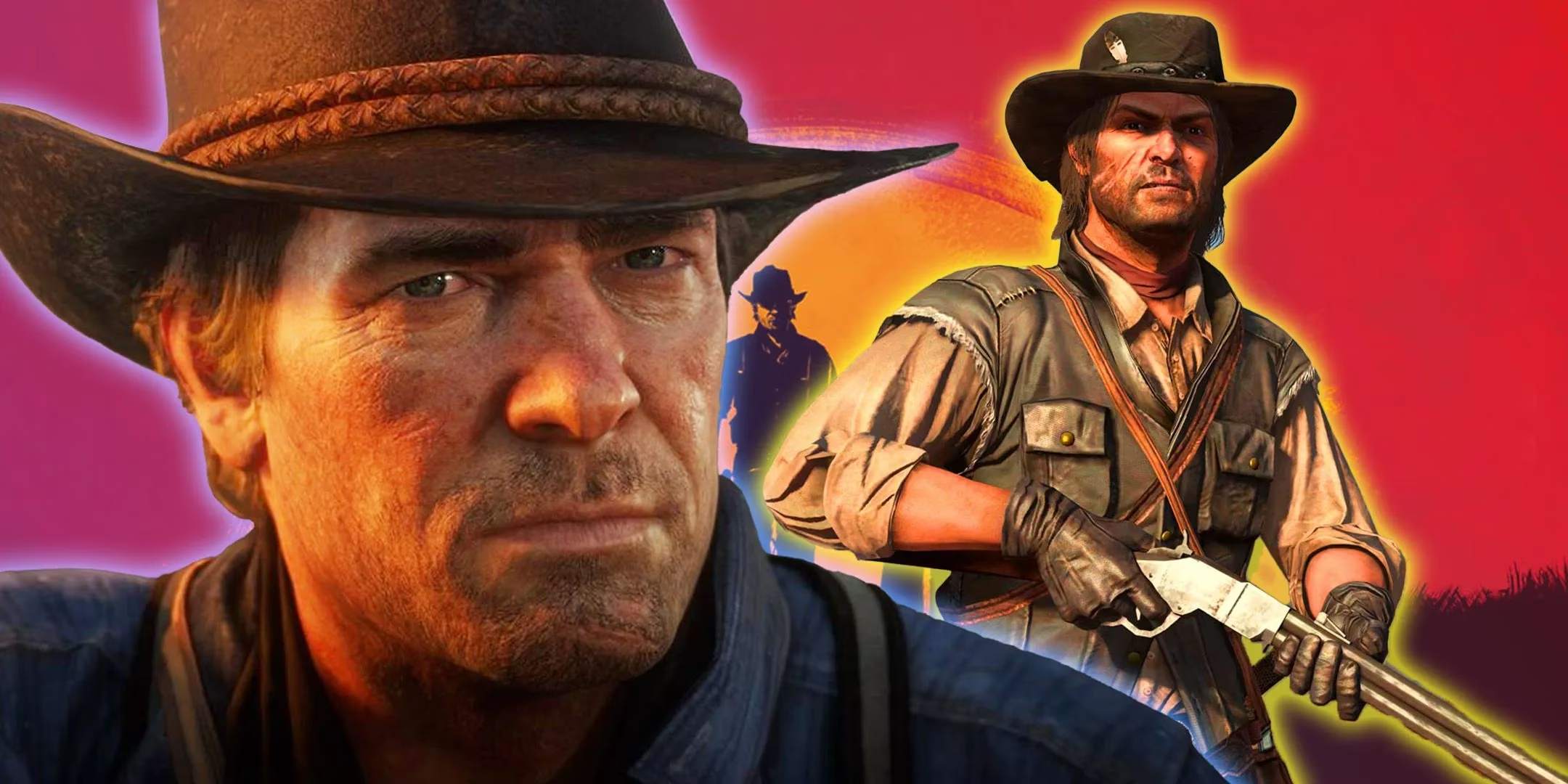
Remember the sheer, unadulterated joy of finding a Pardon Note in Red Dead Redemption? It was like discovering a golden ticket in a world of dirt and despair. These incredibly rare scraps of paper were the ultimate "I regret nothing" button, instantly wiping clean any bounty on John Marston's head, whether it was for accidentally trampling a chicken or deliberately turning a town into a lead-filled colander. Players would scour gang hideouts, crack safes, and loot chests with the fervor of a gold prospector, all for that sweet, sweet legal absolution.
RDR2, in its quest for weighty consequences, decided Arthur Morgan didn't deserve such easy outs. The removal of pardon notes was a deliberate design choice to make the player's actions feel more permanent and the world more punishingly realistic. After all, Arthur is part of the Van der Linde gang, a crew perpetually at odds with the law. Handing him magical legal waivers would be like giving a shark a membership to the Save the Dolphins club—it just doesn't fit the narrative. While it makes for a more immersive experience, players in 2026 still occasionally mourn the loss of that thrilling, guilt-free crime spree enabled by a single piece of paper.
Horse Sense and Sensibility: A Tale of Two Steeds
Ah, the noble horse. In RDR, your steed was a loyal, somewhat disposable companion. If it met an unfortunate end, a quick whistle would summon a near-identical replacement. In RDR2, Rockstar cranked the realism dial to eleven. Horse deaths are permanent without the quick use of a horse revival serum, leading to genuine moments of tragedy and player anguish. Losing a fully-bonded Arabian feels less like a gameplay setback and more like attending a funeral for a dear, pixelated friend.
The differences don't stop at mortality. Remember in the original game, when you'd call your horse and it would gracefully gallop alongside you, allowing for a seamless, action-movie mount? Arthur Morgan isn't afforded such luxury. His horse, bless its heart, will trot to a stop right in front of him, forcing the poor outlaw to do the awkward "run three steps and jump" maneuver, often while bullets whiz past his head. It's a small change, but one that highlights RDR2's commitment to a grounded, sometimes inconvenient, reality.
Draw! The Dueling Divide
High noon showdowns are the bread and butter of the Western genre. Both games feature them, but with wildly different flavors. In RDR2, dueling is a functional, if slightly clunky, combat mechanic. But in the original Red Dead Redemption, duels were an event. What makes the duels in RDR1 stand out is how enthusiastically cinematic they are. A challenge would trigger a dramatic cutscene straight out of a Sergio Leone film—extreme close-ups on twitching eyes, sweeping vistas, and a tense musical score. It became a thrilling minigame where players had to carefully time their draws to fill a meter and outdraw their opponent.
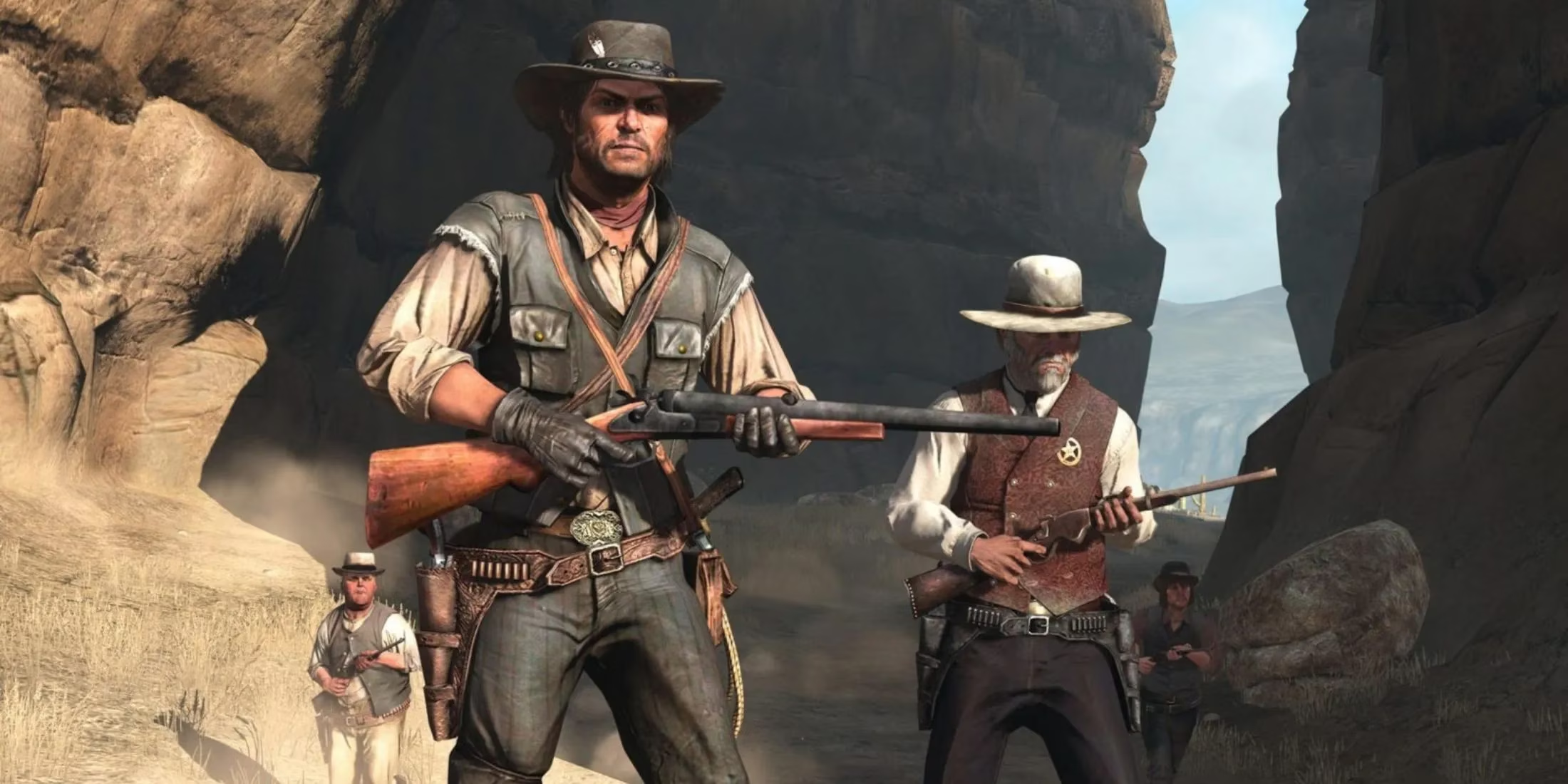
While RDR2 allows for honorable disarming shots, it lacks the pure, theatrical spectacle of its predecessor's system. The original made you feel like the Man With No Name, if the Man With No Name occasionally fumbled the quick-time event and got shot in the face.
No Place to Call Home (That You Actually Own)
In John Marston's world, a weary outlaw could invest his ill-gotten gains in real estate. Safehouses in RDR were permanent purchases—little pockets of civilization where John could save, restock, and pretend, for a moment, that he wasn't a wanted man. Unlike the transient campsites in RDR2, these were permanent structures players could purchase and rely on.
RDR2 traded this for the evolving gang camp, a brilliant narrative device that fostered a sense of community and reflected the gang's deteriorating fortunes. It was a living, breathing hub. However, once the story concludes and the camp dissolves, Arthur (or John, in the epilogue) is left a nomadic millionaire with nowhere to hang his hat. The ability to buy a personal cabin or ranch post-game remains a sorely missed feature for players who want to settle down after a life of chaos.
Cheating at Cards: A Lost Art of Deception
Poker is a staple, but cheating is the spice of life. In Red Dead Redemption, donning the dapper Elegant Suit allowed John Marston to slip an ace from his sleeve. Players could equip the Elegant Suit which would allow them to cheat during card games, engaging in a tense mini-game to avoid detection and a swift, violent end to the evening. It was a risky, rewarding way to make a dishonest living.
RDR2's poker, while beautifully rendered, is strictly above-board. Furthermore, an entire mini-game, Liar's Dice, was left in the past. This bluffing dice game was a fan-favorite side activity where John could gamble and, of course, cheat his way to victory. Its absence is a reminder that not every pastime made the journey to the new frontier.
The Disguise That Couldn't Disguise
In RDR, slapping on a bandana was the ultimate criminal hack. It created a separate "unknown outlaw" identity, allowing players to rob, shoot, and raise hell without touching their honor or fame. With a pardon note and a disguise, players could explore the darker roleplaying features without long-lasting punishment. It was a sandbox player's dream.
RDR2, again in the name of realism, nerfed this system into the ground. Arthur's bandana is about as effective as a pair of novelty Groucho Marx glasses. Civilians might be briefly fooled, but lawmen see through it instantly, and your honor still takes a hit for your misdeeds. The fantasy of being a mysterious, untraceable bandit was replaced with the reality of being Arthur Morgan, a very recognizable man with a very distinctive voice, even with a piece of cloth over his nose.
South of the Border: The Missing Frontera
RDR2's map is breathtakingly huge, encompassing swamps, mountains, and plains. Yet, it lacks one iconic region from the first game: Mexico. Crossing the Rio Grande in RDR wasn't just a map expansion; it was a cultural shift. The different buildings, NPCs, and overall feel helped sell the immersion of traveling to a new country. The music changed, the architecture changed, and the quests took on a different flavor. It made the world feel vast and varied in a way that simply having different biomes in one country cannot fully replicate.
While a hypothetical Red Dead Redemption 3 might head north to Canada, the absence of Mexico in the prequel is a poignant reminder of a more geographically diverse, if technically smaller, frontier.
The Long, Long Trail: Fast Travel Frustrations
Red Dead Redemption 2 is a game about the journey, sometimes to a fault. In the original, players could fast-travel between any discovered campsite on the map—a blessing for those long hauls across the desert. Fast traveling between temporary encampments is a sorely missed convenience in RDR2. Rockstar clearly wanted players to soak in the world, leading to random encounters and emergent stories.
While trains and stagecoaches exist, and a limited camp fast-travel is unlocked later, the freedom to instantly zip across the map from any humble campfire is gone. It's a design decision that champions immersion but can test patience, especially for completionists in 2026 trying to find that last dinosaur bone or legendary fish.
Bounty Hunting: Quality Over Quantity (and Replayability)
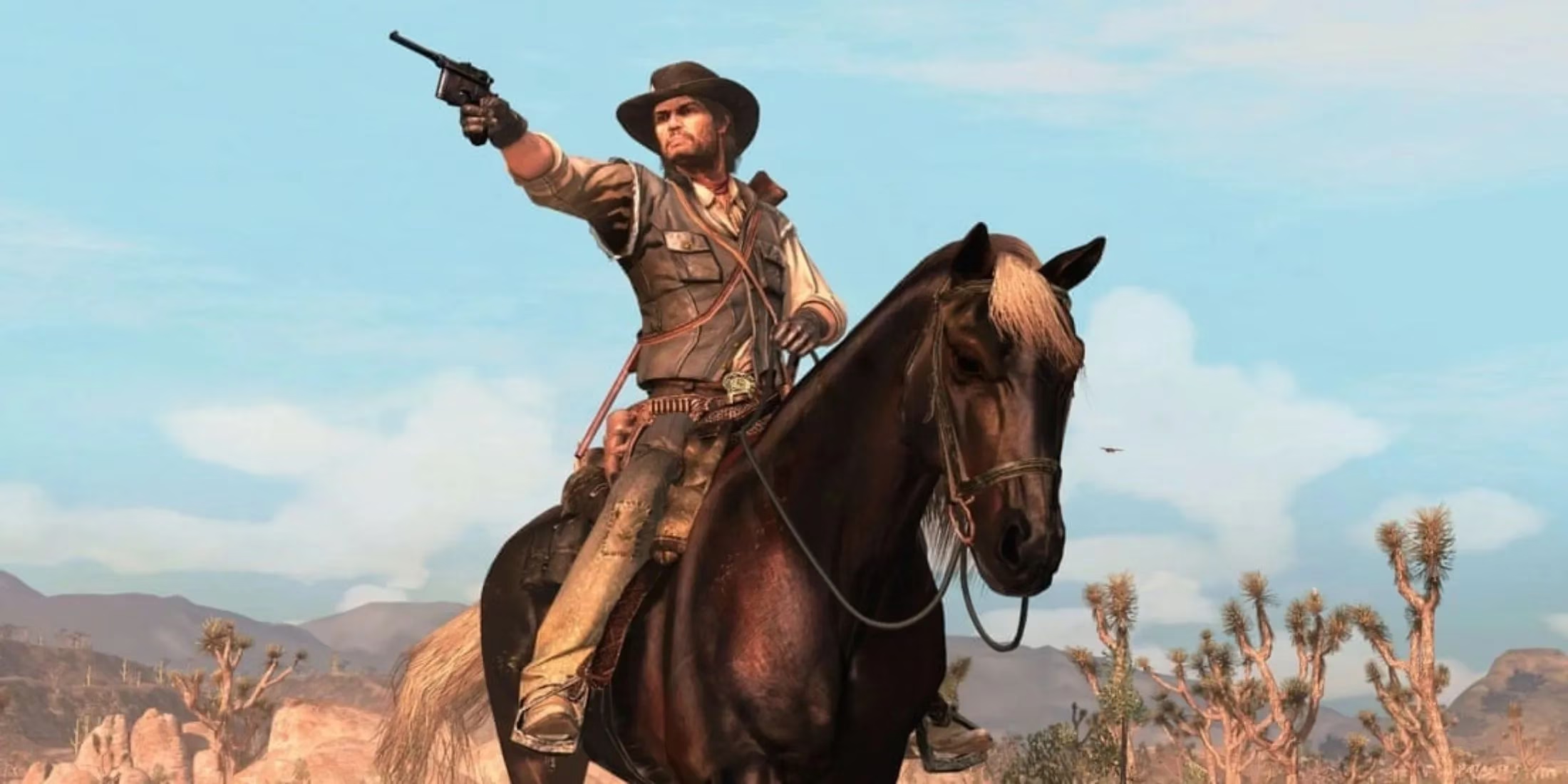
After beating the epic story of RDR1, what was there to do? Unlimited, randomly generated bounties, that's what. These provided near-endless, if sometimes repetitive, gameplay. The amount of variation and freedom to engage with bounties gave many players hours of enjoyment from the post-game.
RDR2 opted for a curated experience. It features a handful of brilliantly crafted, story-driven bounty missions. The bounties were made of higher quality at the cost of being drastically reduced in numbers. Once they're done, that's it. For a game criticized for its thin post-game content, the loss of an infinite bounty system is felt deeply by players who just want to keep living the outlaw life in its stunning world.
The Heist That Got Away
Finally, we come to perhaps the most glaring omission for a game about outlaws: unscripted bank robbery. In RDR1, any bank in any town was a potential target. John had no limits on his bank-robbing ventures, being able to hit any bank in the game for some quick cash. Players could case the joint, create diversions, and execute their own chaotic getaways. It was a core fantasy of the outlaw life.
RDR2 has spectacular heists—but they are magnificent, set-piece story missions. Once completed, the banks become impenetrable vaults. It's a massively missed opportunity not to let players engage in their own bank robberies throughout the world. In 2026, players still use mods to attempt to recreate this experience, but it's not the same as a feature baked into the game's design.
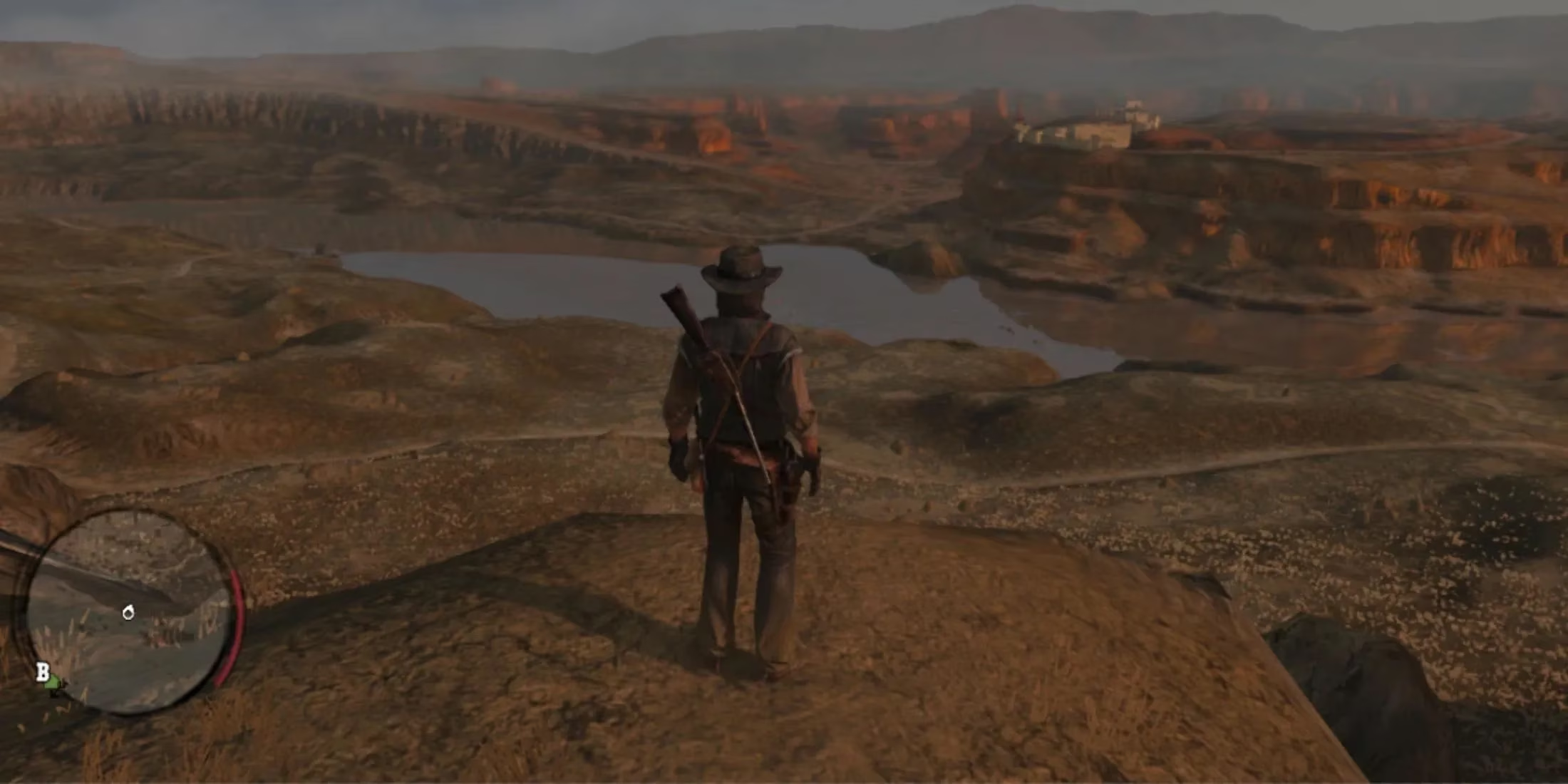
In the end, the journey from Red Dead Redemption to Red Dead Redemption 2 is a masterclass in trade-offs. One game offered a more playful, systems-driven sandbox with endless cowboy toys. The other offers a profound, narrative-heavy, and punishingly realistic simulation of a dying way of life. They are two sides of the same gold coin, each invaluable, each reflecting the era of gaming from which they sprang. The lost features aren't necessarily flaws in RDR2; they are ghosts of a different frontier, reminders that in the march of progress, even in video games, some beloved traditions get left behind in the dust.