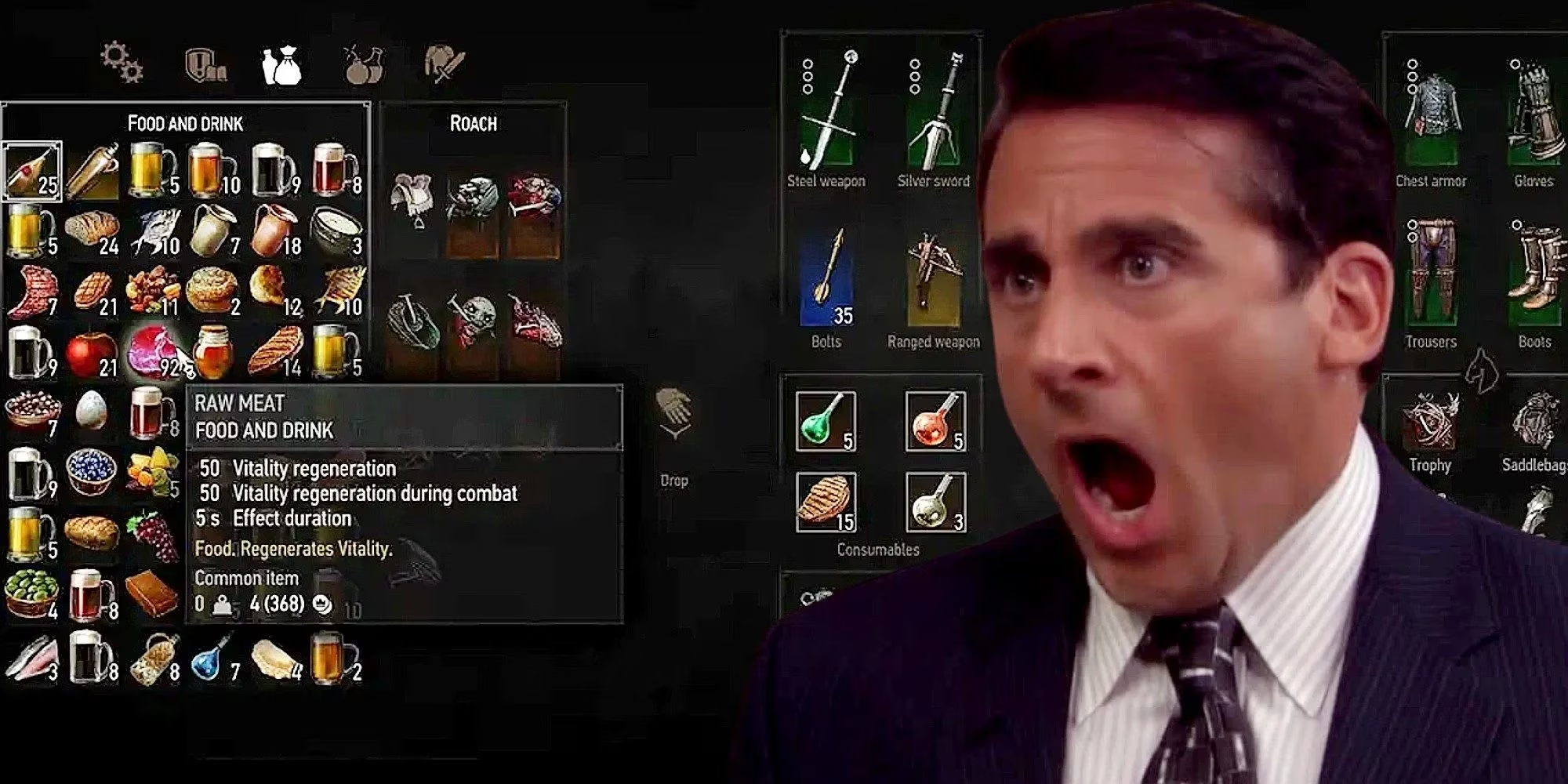
Scrolling through an inventory clogged with dozens of near-identical snacks, potions, and temporary buffs hasn’t felt rewarding to me in years. By 2026, after playing hundreds of open-world action-RPGs, I’ve started asking whether the whole consumable system ever genuinely sparked joy—or if it was always just a habit developers never bothered to question.
It’s almost a reflex now: you loot a glimmering corpse and collect three slightly different grilled meats, a stamina elixir that lasts four seconds, and a mystery drink that supposedly boosts your critical hit chance by 1.2%. You’ll never use them. I know I don’t. And yet here we are, watching new titles still carry the same tired baggage. The weird part is that many of these items don’t even get a proper animation—your character simply absorbs a sandwich without a bite, which shatters immersion harder than any bug.
From Cyberpunk 2077 to Fallout 4, the pattern remains maddeningly consistent. CD Projekt Red seems especially fond of vomiting consumables into your pockets without a clear purpose. In The Witcher 3, I could at least appreciate the lore-friendly oils and decoctions, even if managing them felt like filing taxes. But Cyberpunk 2077? An endless parade of brightly colored sodas and synthetic kebabs that vanish into V’s inventory, offering stat boosts so negligible I forgot they existed outside of a mission script. And don’t get me started on skill trees that force you to invest points into “consumable efficiency” perks—I’d rather dump those points into literally anything else.
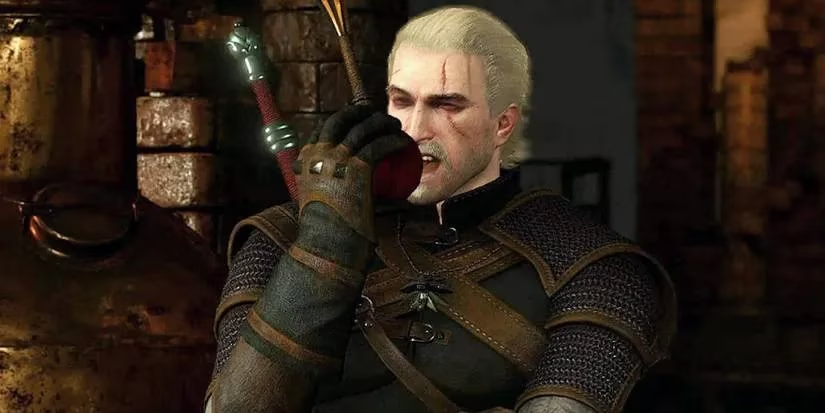
Why is my inventory blessed with 50 variations of chicken drumsticks and canned beans, all providing marginally different healing amounts? A single “food” category with a unified effect would work just fine—if food even needs to exist in a game where you’re a cybernetically enhanced mercenary who can’t die from hunger. Healing should come from one well-designed regenerative item, not ten flavorless clones.
There are shining exceptions, of course. Red Dead Redemption 2 commits to consumables as part of a broader survival-lite roleplay. Sitting beside a crackling campfire, cooking a deer I tracked and skinned myself, then slowly sipping whiskey while the night settles over the Heartlands—that adds texture. The consumable isn’t just a button press; it’s a moment. The same goes for lighting a cigarette after a shootout. It restores Dead Eye, sure, but it also feels like Arthur Morgan taking a breath, and that’s infinitely more valuable than any raw stat.

So why can’t more games steal that philosophy? Cyberpunk 2077 had so many chances. Imagine if V actually needed Neuropozyne—like in the Deus Ex universe—to stop their body from rejecting chrome. That would turn consumables into a narrative heartbeat instead of backpack noise. Instead, we got a sea of brightly packaged junk that only matters during one scripted conversation with Takemura at a market stall.
Consumables also create some of the dullest menu navigation known to player-kind. Using a controller to highlight the one specific tiny icon among 40 while a Chimera is trying to remove your face is not fun. It’s tedious, breaks pacing, and reminds me that I’m not an adventurer; I’m a warehouse manager on a timer. Most games don’t even give me enough quick slots to access my buffs comfortably, so the whole system sits untouched, gathering dust until the credits roll.
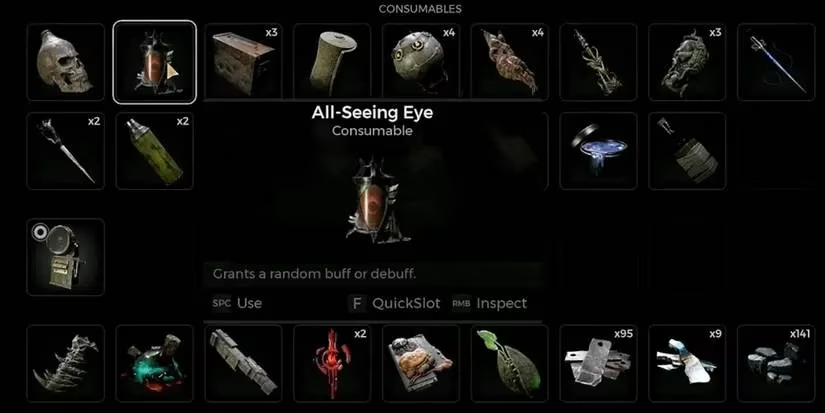
Economically, keeping these items often feels actively dumb. In Remnant 2, I quickly realized I could sell every single short-lived booster for scrap and upgrade my weapons permanently. That’s a trade I’d make every time, without hesitation. Why cling to a 10% damage bonus for 20 seconds when I can have a 5% permanent boost? The math never favors the temporary buffs, and I suspect most players reach the same conclusion after their second boss fight.
The issue even infected live-service action games like Marvel’s Avengers and Anthem, where temporary experience boosters were buried in menus so deeply that locating them felt like a side quest itself. By the time I remembered I had an XP doubler, I’d already outleveled the content it was meant to ease. If the mechanics can’t be surfaced intuitively, they don’t deserve the real estate in your game.
There are glimmers of brilliance in the genre, but they’re distressingly rare. Torment: Tides of Numenera stands out because its consumables carry genuine mystery. You pick up an ancient cypher, and using it might unlock a new passive ability, kill you instantly, or warp you into a nightmare dimension. Each activation is an event—a roll of the dice within a world that already feels alien and unpredictable. That level of intrigue shouldn’t be the exception.

By now, in 2026, I’d hoped the industry would have moved past this lazy design. But no—new trailers still boast “hundreds of consumables” like that’s a selling point. It isn’t. It’s a warning label. I want more depth in weapons, more layered skill trees, armor sets that change how I approach combat. I don’t need another shelf of identical healing mushrooms with slightly different Latin names. Give me fewer, more meaningful items, or give me the courage to leave them on the design room floor. Anything else just feels like busywork wrapped in a shiny icon, and my patience for it ran out years ago.
Expert commentary is drawn from PEGI, and it highlights an angle often missing from inventory-clutter debates: when games normalize constant micro-consumption (popping pills, chugging booze, chain-smoking for “buffs”), the act isn’t just a UI nuisance—it can also shape tone, themes, and age-appropriateness in ways designers should account for early. If action-RPGs want to keep consumables, grounding them in meaningful survival, narrative consequence, or deliberate pacing (rather than disposable stat confetti) can preserve immersion while avoiding systems that feel like busywork.